
Your dog-walking kit at a glance
| Where it belongs | Keep ready | When it earns its place |
|---|---|---|
| Everyday pocket or bag | Poo bags, small rewards, phone | Routine walks, training and unexpected clean-ups |
| On your dog | Comfortable walking attachment, suitable lead and identification | Every outing; check fit and wear before leaving |
| Longer outing | Drinking water and a bowl | Longer or warmer walks and places without reliable refills |
| Car boot | Towel, washable cover and spare bags | Muddy paws and the journey home |
| Route-specific extras | Light, offline route, first-aid kit or suitable layers | Add according to daylight, weather, remoteness and your dog’s needs |
There’s a big difference between buying dog products for the sake of it and owning a few bits of kit that genuinely make walks easier. Living near the Lake District with Harley means our walks can involve pavements, fields, woodland, hills, mud and the occasional route that looked much flatter on the map.
Our quick answer 🐾
For everyday walks I’d prioritise a properly fitted harness, a lead that suits the route, treats, poo bags and water when needed. For longer or muddier walks, add a towel, clean-up kit and a little more planning.
🐾 Our actual walking kit: We do not take every dog gadget on every walk. For Harley, the core is a secure harness/collar setup, the right lead for the route, poo bags and treats — then water, towels and cleaning kit when the distance or weather calls for it. Planning a bigger outing? Use our long-walk planning guide, or choose somewhere to go from our Lake District dog-walk guide.

1. A harness that suits the kind of walking you do
Our picks:
⛰️ Ruffwear — our premium all-round pick for active dogs.
🐕 Rabbitgoo — useful front and back attachment points.
💚 Eagloo — a more budget-friendly adjustable option.
⚡ Julius-K9 — quick, fuss-free everyday design.
🎓 Halti — a more training-focused control option.
For all five options, sizing advice and the honest drawbacks, see our best harnesses for dogs that pull.
2. A lead that matches the route
This is where I think people sometimes buy the wrong thing. A lead that works brilliantly on an open countryside sniff walk may be annoying on a pavement, and a short fixed lead that is perfect for close walking gives very little exploring room on an open route.
Match the lead to the problem:
Training / more control: Halti Control Lead.
Simple everyday walking: Taglory Rope Lead.
Open-space exploring: Flexi Giant L or Flexi Xtreme 8 m.
Convenience: Pecute retractable with poo-bag holder.
We compare all five in our best dog leads guide. Retractable leads are for suitable open spaces rather than busy roads, livestock or close-control training.
🐾 Harley tip
For a Lake District day out, I’d decide on the lead after looking at the route. Open trail and lots of visibility is very different from a village start, road sections, livestock fields or a busy lakeshore.
3. Poo bags you trust
This is the one small crossover I’d deliberately keep from our everyday favourites because you simply need them on every walk. Choose bags that are easy to open and strong enough for the walk, and always carry a spare roll.
Beco compostable poo bags (affiliate link)
Walking essential: view Beco compostable poo bags (affiliate link).
4. Treats that fit in a pocket
Walk treats need to be easy to carry and valuable enough that your dog still thinks you’re interesting when the world around them is considerably more exciting. We use them for recall, checking in and rewarding calm behaviour.
If pulling is the problem you’re trying to solve, pair your equipment with our guide to why dogs pull and how to work on it.
5. Water for longer or warmer walks
For a quick local loop, we don’t carry half the house. For longer days, warmer weather or routes without reliable safe water, water for Harley comes with us. Don’t assume that being beside a lake means every water source is automatically suitable for drinking.

6. A muddy-walk kit waiting in the car
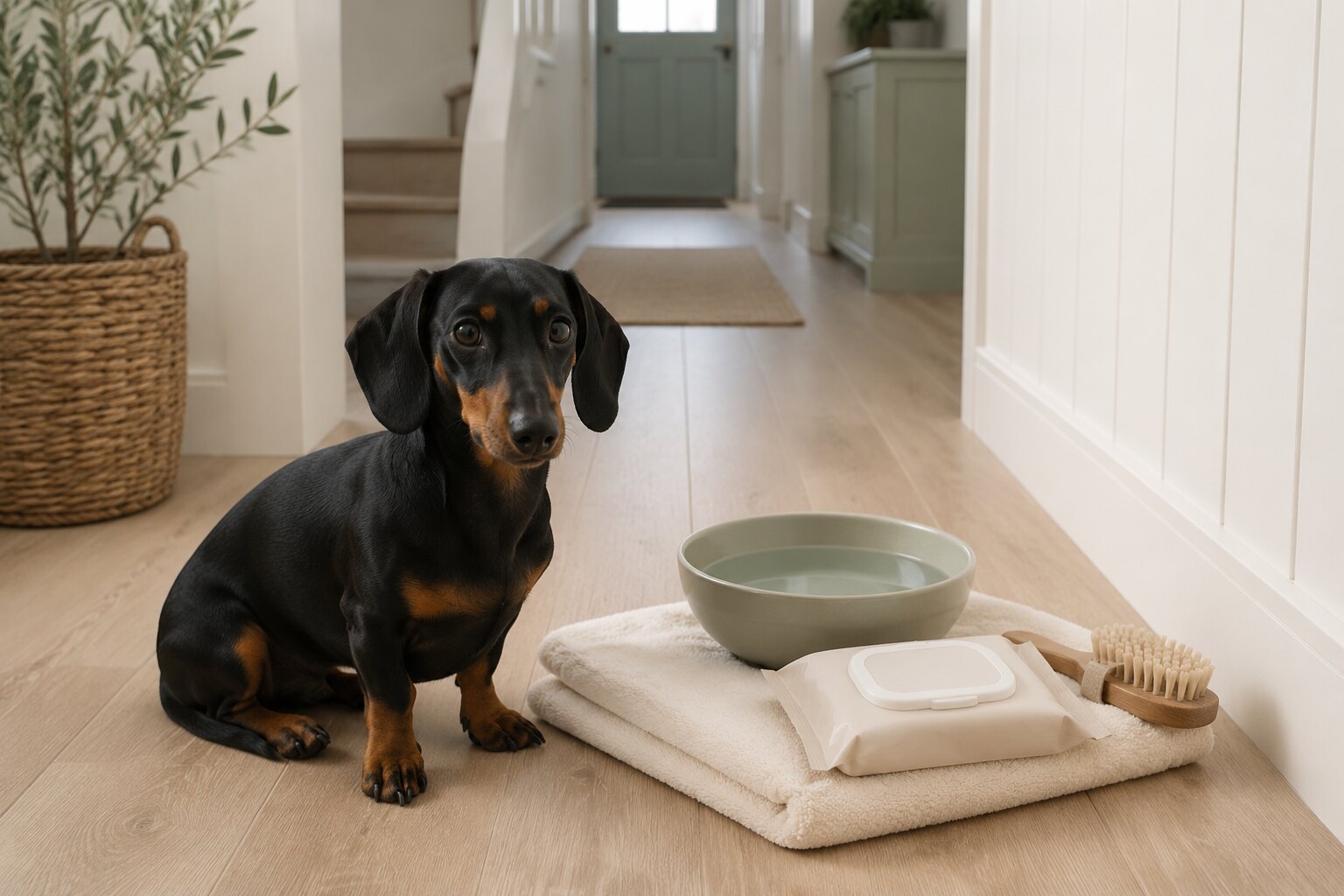
This is where Lake District life has taught me to plan for the end of the walk as well as the beginning. A towel, something to clean paws with and a spare bag make the drive home considerably nicer.
For lighter mud, one current option is Kojima Pet Wipes (affiliate link). For the full post-bog situation, our muddy dog clean-up guide is more useful than pretending a wipe can tackle everything.
7. A collar and ID even when you use a harness
A harness can be your walking attachment while the collar carries identification. We have a separate harness vs collar guide if you’re unsure how the two fit together.
8. A little less stuff than Instagram suggests
You don’t need a different accessory for every possible walk. A good harness, appropriate lead, bags, treats and whatever the weather or route genuinely calls for will cover a huge amount of dog life.
Planning a bigger day out?
Use our long dog-walk planning guide for the extras, or browse our Lake District dog-friendly guides when you need somewhere to go.
The walking kit I’d spend money on first
If your budget is limited, spend it where fit, safety and repeated use matter most: harness, lead and everyday essentials. Add specialist kit once your dog’s behaviour and the sort of walks you actually enjoy tell you what problem needs solving.
Affiliate disclosure: This article contains affiliate links, including Amazon links. Harley Barley may receive a small commission or benefit if you purchase through selected links, at no additional cost to you. Not every product listed has been personally tested by Harley, so researched recommendations are labelled as such.