
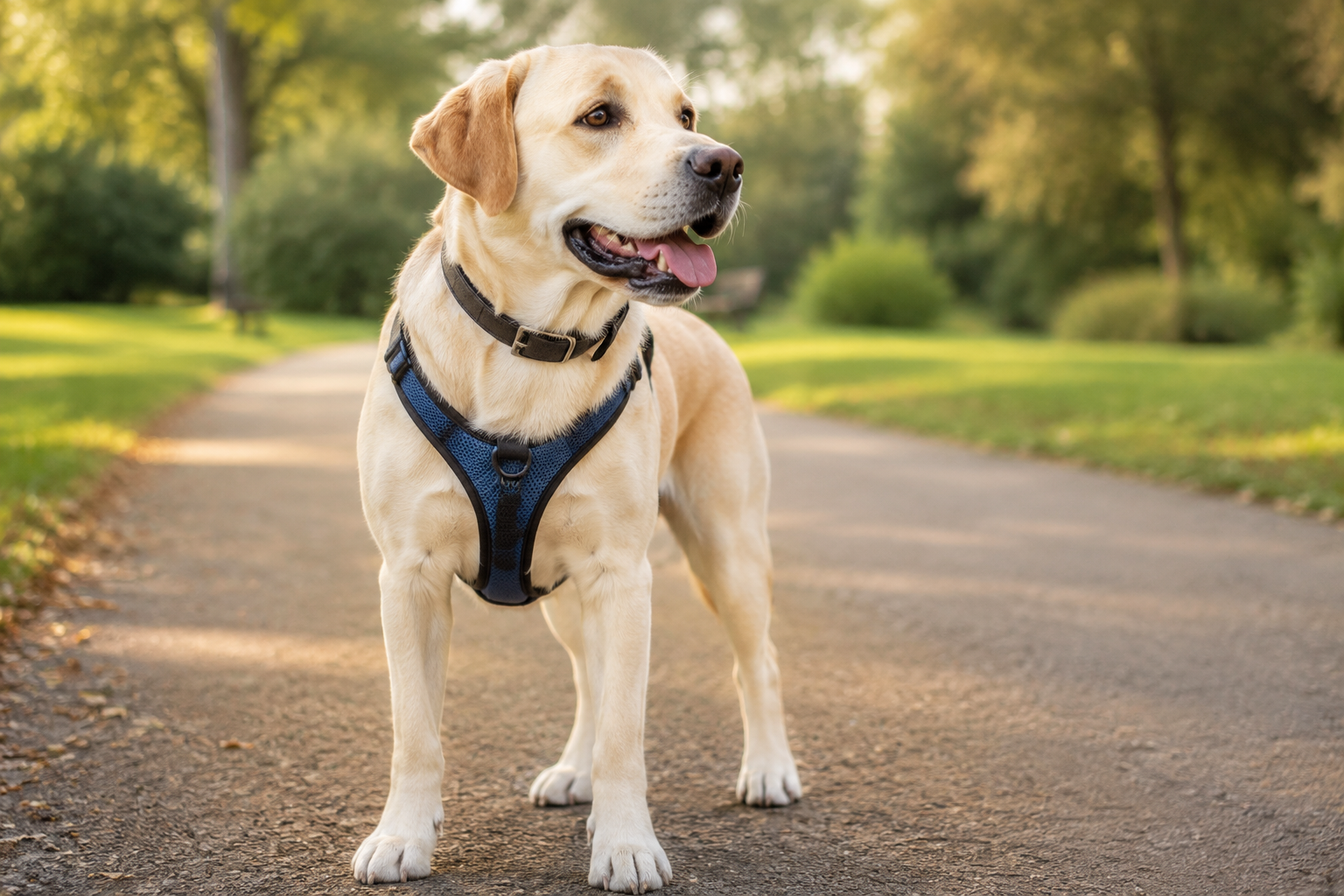
🐾 Harley hint: We like the collar-and-harness combination: the collar carries ID, while the harness gives a more comfortable lead attachment. If pulling is the problem, compare our best dog harnesses, lead picks and pulling guide.
Harley Barley • Training & Behaviour
The simple answer is often: use both
You clip the lead on, your dog spots a squirrel, and suddenly the harness-or-collar debate feels much less theoretical. For most dogs, the best answer is not strictly one or the other: use a comfortable collar for identification and a well-fitted harness as the main lead attachment, especially if your dog pulls.
Quick answer: A harness usually spreads force across the body and avoids concentrating pressure around the neck. A collar is still important—and legally required with identification in UK public places—but it does not have to be where you attach the walking lead.
Is a harness or collar better for dog walking?
A harness is often the better lead attachment for puppies, enthusiastic pullers, dogs with delicate necks and owners who want more control of the body. A collar is lighter, simpler and suitable for carrying an ID tag.
The right choice depends on your dog, the route and the activity. A calm adult dog walking on a slack lead may be perfectly comfortable on a collar. A dog who lunges, coughs or spends half the walk at full extension is usually better managed from a harness while you work on training.
Why choose a harness?
A harness can:
- Spread pressure over the chest and torso rather than the throat
- Offer front, back or dual lead attachment points
- Give better body control around roads, livestock and busy spaces
- Make it easier to add a safety strap for an escape-prone dog
- Suit long-line walking when attached at the back
The drawback is that fit takes more care. A loose harness can twist or be backed out of; a tight one can rub and restrict movement. Fluffy coats also hide poor positioning surprisingly well.
If pulling is the main concern, compare our five harnesses for dogs that pull.
Why choose a collar?
A collar is convenient, easy to leave on for normal identification and less likely to mat a large area of coat. For a dog who already walks gently, attaching a lead to a properly fitted collar may be perfectly practical.
Collars are less forgiving when the lead becomes tight. Pressure is concentrated around the neck, which is why a harness is often recommended for puppies and dogs who pull.
The UK rule owners should know
Using a harness does not replace the collar requirement. Under the Control of Dogs Order 1992, a dog in a highway or public place must wear a collar carrying the owner’s name and address, either on the collar or an attached plate or badge. A microchip does not replace this requirement.
You can still attach the lead to the harness and keep the collar solely for identification.
What about a dog that pulls?
Choose a well-fitted harness for comfort and management, then train the behaviour. No item of equipment can teach loose-lead walking by itself.
Our favourite setup for focused training is a dual-clip harness with a Halti Control Lead. One attachment can provide guidance at the front while the other adds stability at the back. For the actual training process, follow our guide on why dogs pull and how to stop it.
Which option suits different walks?
| Situation | Better starting point | Why |
|---|---|---|
| Puppy learning to walk | Harness | Reduces pressure around the neck during inevitable mistakes |
| Strong or excitable puller | Dual-clip harness | Better body control while training |
| Calm neighbourhood walk | Harness or collar | Choose based on fit and your dog’s comfort |
| Long-line sniff walk | Back-clip harness | Avoids a long line snapping tight against the neck |
| Identification in public | Collar and ID tag | Required in the UK |
| Escape-prone dog | Secure harness plus collar backup | Two points of security can reduce risk |
How should a collar fit?
You should be able to slide two fingers comfortably beneath it without the collar being loose enough to slip over the head. Check it regularly for wear, rubbing and changes in fit.
Three sensible everyday options are the Fida padded collar, Halti dog collar and Haapaw reflective padded collar. These are product suggestions rather than claims of personal testing, so check the current measurements and materials before ordering.
How should a harness fit?
Measure around the widest part of the chest and follow the individual brand’s sizing chart. Straps should sit clear of the throat and front-leg movement. Watch your dog from the front and side: the harness should remain centred rather than rotating as they walk.
For Cockapoos, run your fingers beneath every strap. Curls can make a harness appear snug when it is floating over the coat—or hide a strap that is rubbing.
Try this: Photograph the fitted harness from above and both sides. It is much easier to notice twisting, uneven straps or a buckle sitting behind the elbow in a still image.
Can my dog wear both at once?
Yes, and for many dogs that is the most useful setup. Keep the ID tag on the collar and attach the lead to the harness. For extra security, use a short safety connector or double-ended lead between them.
Frequently asked questions
Is a collar enough for a dog that never pulls?
It can be, provided it fits correctly and your dog remains comfortable. A harness still offers useful control in busier environments.
Can a puppy wear a harness?
Yes. Choose a light, adjustable design and check the fit frequently as the puppy grows.
Why does my dog freeze when I put a harness on?
They may find the sensation unfamiliar or dislike equipment passing over their head. Introduce it gradually with treats and brief, positive sessions rather than forcing them to walk immediately.
Should I attach an ID tag to the harness?
You may add identification to a harness, but UK law specifically requires a collar bearing the owner’s name and address or an attached plate or badge in public.
The simple answer
For most dogs, we would choose both: a collar for legally compliant identification and a harness for comfortable lead attachment. Add the right lead for your walking style, then focus on training rather than expecting equipment to perform miracles.