
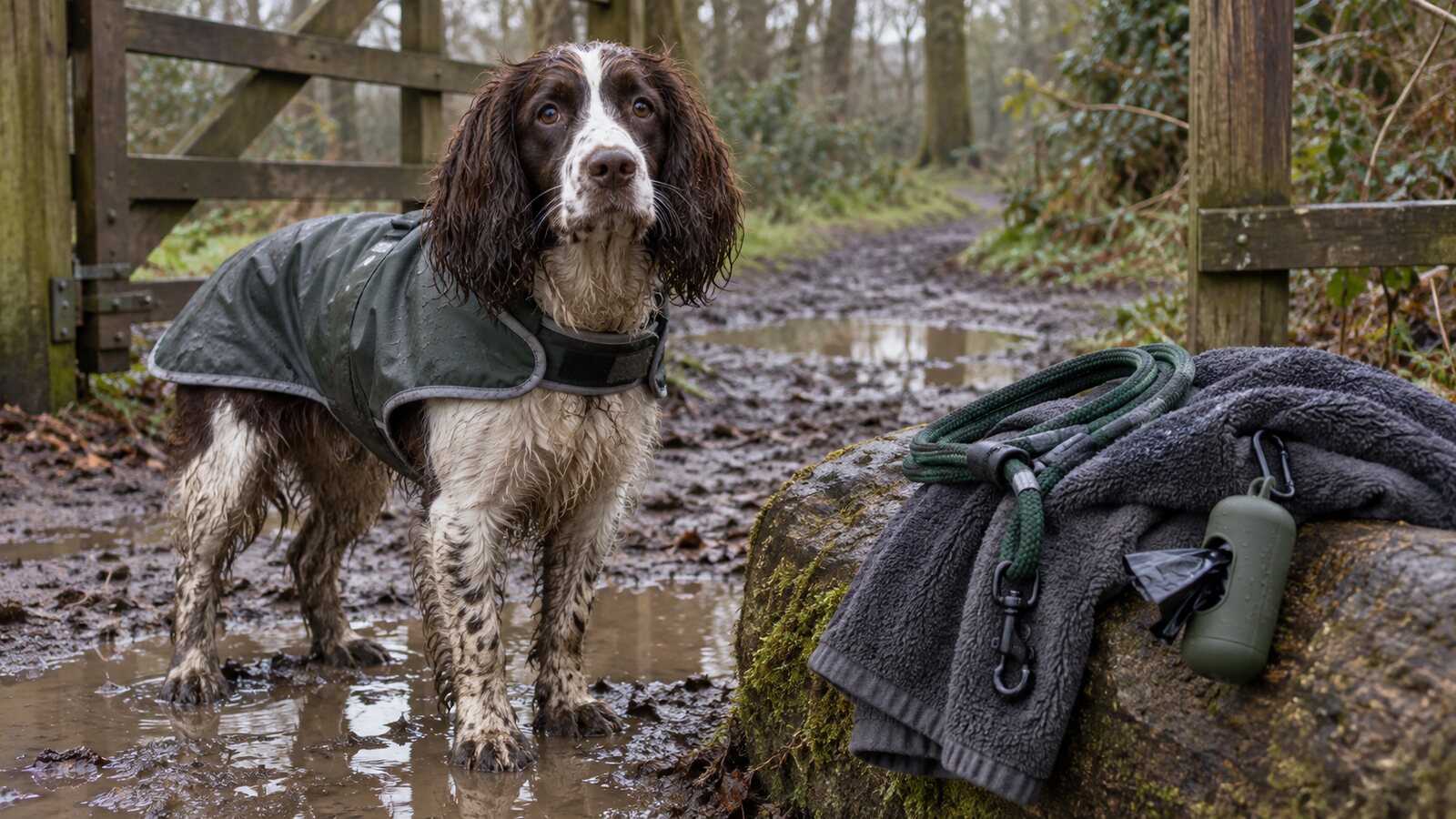
Rain is simply part of dog ownership in the Lake District. Harley is a Cockapoo, so wet legs, muddy paws and a coat that holds water are familiar territory for us.
In this guide
- The essentials versus optional extras
- What belongs in your pocket, car and doorway
- Visibility and flood safety
- Coats, paws and drying
- Our real-life Harley routine
British rain rarely waits for a convenient day. The useful kit is not the biggest pile of gadgets; it is the small set that keeps your dog visible, comfortable and easier to clean afterwards.
Start with safety
In heavy rain or poor visibility, shorten the route, avoid swollen water and use reflective gear or a light. A waterproof coat is helpful only if it fits well and does not restrict movement.
What to carry
- Secure lead and well-fitting harness or collar.
- Poo bags in a dry dispenser.
- Water for longer walks.
- A small towel for the car.
- A phone, torch and reflective detail in low light.
At the door or in the boot
Keep one absorbent towel ready, plus a washable mat where your dog can pause. Paw-cleaning devices can help after clay or grit, but gentle water and a cloth are often enough.
The Dexas MudBuster (affiliate link) is one option already featured in our muddy-walk kit. Introduce any paw cup slowly and stop if your dog is uncomfortable.
Coat, towel or both?
Short-coated, older or small dogs may benefit most from a weatherproof outer layer. Long-coated dogs may still get soaked underneath, so a towel or drying coat at home remains useful. Fit matters more than appearance.
Look after paws afterwards
Rinse away road salt, grit or mud, then dry carefully between the toes. Check for soreness, small cuts and trapped debris rather than applying products automatically.
Build your own small kit
For a broader checklist, see our dog walking essentials guide and muddy-walk favourites.
Build the kit in three layers
| Where | Keep there | Why |
|---|---|---|
| Pocket or bag | Poo bags, phone, light, treats | Needed during the walk |
| Car boot | Towel, spare lead, water, washable mat | Manages the journey home |
| By the door | Dry towel, paw-cleaning supplies, drying coat | Stops mud travelling through the house |
🐾 Harley’s Hint
Our biggest Lake District lesson is to prepare before the walk. Once Harley is wet and excited at the door, that is not the moment to discover the clean towel is upstairs.
Rain changes more than comfort
Visibility falls, paths become slippery and familiar streams can rise quickly. Avoid fast water, flooded stepping stones and unstable banks. Turn around early rather than treating a planned route as something you must complete.
Does every dog need a raincoat?
No. A healthy, active dog with a weather-resistant coat may not benefit. Small, short-coated, older or slow-moving dogs can become cold more quickly. A coat must allow normal shoulder movement and toilet behaviour.
Reflective and light-up equipment
Reflective strips help when headlights reach them; a small dog-safe light improves visibility before that point. Neither replaces a lead near roads. Attach lights where they cannot swing into the face or encourage chewing.
Our after-walk routine with Harley
- Pause on a washable mat.
- Blot the body before rubbing the coat.
- Rinse gritty paws if needed.
- Dry carefully between the toes.
- Comb only once the coat is manageable, without dragging knots.
- Hang kit where it can dry completely.
🐾 Harley’s Hint
Harley’s furnishings are not precious on a wet day—our system is. A towel in the boot, another by the door and a washable throw on his usual settling place save far more effort than trying to keep every splash outside.
Buying rainy-day kit without wasting money
Start with the problem you actually have. If the difficulty is a muddy car, buy a washable liner or towel before a fashionable coat. If visibility is the concern, improve reflective detail and lighting. If paws remain gritty, organise a rinse station.
Fit-check a waterproof coat
- The neck should not press on the throat.
- Front legs must move freely.
- Straps should not rub armpits.
- Fabric should not trail.
- Your dog must toilet normally.
- Check again once wet.
Paw care after wet walks
Rinse salt, mud and grit with lukewarm water when needed, then dry between each toe. Persistent licking, limping, redness, swelling or a damaged nail needs veterinary advice.
Frequently asked questions
Should I skip a walk in heavy rain?
Shortening or replacing a walk is sensible when visibility, flooding, wind or thunder makes conditions unsafe. Indoor scent games and training can provide enrichment.
Are retractable leads suitable in bad weather?
They are difficult to shorten quickly around roads, bikes and flooded edges. A fixed lead usually provides clearer control.
How do I stop wet-dog smell?
Dry the coat thoroughly, wash damp bedding and let towels dry fully. Persistent odour, itching or redness may indicate a health issue.