
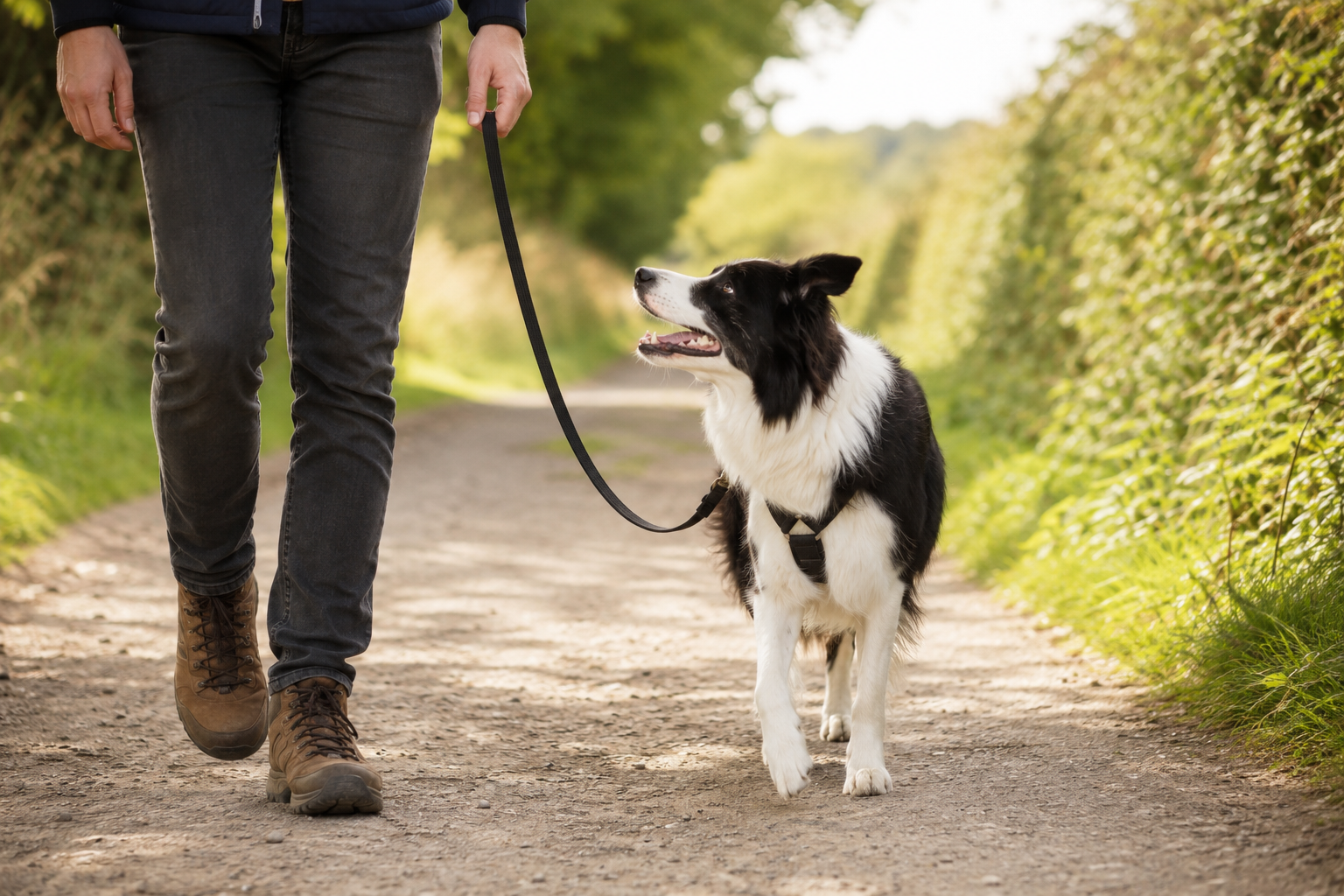
🐾 Harley hint: When Harley gets excited, the biggest difference comes from rewarding the loose-lead moments before he reaches full steam. Equipment helps, but the training is what changes the habit. You can also read our Cockapoo-specific pulling guide, compare our harness picks, or see the best leads for pullers.
Harley Barley • Training & Behaviour
Calmer walks start with understanding the pull
One moment you are heading out for a peaceful walk. The next, your dog is towing you towards an especially fascinating hedge while your shoulder files a formal complaint. If you keep wondering, “Why does my dog pull on the lead?”, the reassuring answer is that they are not being stubborn or trying to dominate you.
Dogs usually pull because it works. Tightening the lead gets them closer to the smell, dog or patch of grass they want to investigate. Excitement, worry, an overstimulating environment and simply walking faster than us can all add to it.
Quick answer: Pulling is often a learned behaviour fuelled by excitement or anxiety. Teach your dog that a loose lead moves the walk forwards, while a tight lead makes progress pause.
Why does my dog pull on the lead?
There is rarely one single reason. Before changing equipment or practising heelwork, watch what is happening immediately before the lead tightens.
- The destination is rewarding. Pulling gets your dog to a smell, person or playmate faster.
- The walk starts at full excitement. If your dog launches through the door, that energy usually follows you outside.
- The surroundings are overwhelming. Busy pavements, traffic or unfamiliar dogs can make some dogs rush forwards or try to escape.
- Dogs naturally walk faster. Four legs and an urgent appointment with every lamppost give them a speed advantage.
- Loose-lead walking has not been taught yet. It is a skill, not something dogs arrive knowing.
Harley can be wonderfully enthusiastic about the world. A walk in the Lake District offers smells, dogs and muddy possibilities in every direction, so expecting perfect lead manners without practice would be a little ambitious.
Does pulling mean my dog is trying to be dominant?
No. Pulling is much more usefully understood as behaviour that has been practised and rewarded. If pulling takes your dog where they want to go, it makes sense that they repeat it.
That distinction matters. Training works better when you show your dog what does earn progress, rather than correcting them for getting it wrong.
How do I stop my dog pulling on the lead?
1. Begin before you leave the house
Clip the lead on while your dog is relatively calm. If the front door causes instant chaos, pause and reward four paws on the floor or a moment of eye contact before opening it.
You do not need a military sit. You are simply lowering the starting temperature of the walk.
2. Practise somewhere boring
Start in the house, garden or a quiet stretch of pavement. Reward your dog beside you, take one or two steps, then reward again while the lead remains loose.
Five successful minutes beat forty minutes of both of you becoming frustrated.
3. Stop when the lead becomes tight
When your dog pulls, stop moving. Stay calm and wait for the lead to loosen, then continue. Dogs Trust recommends this simple pattern: a loose lead allows the walk to move forwards; pulling does not.
Avoid jerking the lead or dragging your dog back. The message should be predictable, not frightening.
4. Reward the position you want
Give small treats beside your leg while the lead is slack. You can also use praise, permission to sniff or forward movement as rewards.
Sniffing is not the enemy. In fact, letting your dog investigate after a few lovely loose steps can be one of your best rewards.
5. Change direction before pulling gathers momentum
If you spot the distraction first, turn gently, create distance or ask for your dog’s attention. Waiting until they are already at the end of the lead makes the task much harder.
6. Make the walk easier
Choose quieter routes while you teach the skill. A dog who can succeed on a calm lane may not yet manage the same behaviour beside traffic, livestock or five excitable friends.
7. Stay consistent
If pulling sometimes earns forward movement and sometimes does not, the lesson becomes confusing. Everyone walking your dog should follow the same basic rule.
Try this: Pick a ten-minute route and forget distance. Every loose lead moves you forwards; every tight lead pauses. Your first few attempts may be painfully slow, but clarity matters more than mileage.
Will a harness stop my dog pulling?
A harness can make walks more comfortable and give you better control, but it does not teach loose-lead walking by itself. Think of it as helpful equipment, not a cure.
A well-fitted harness may reduce pressure on the neck, particularly for a dog who lunges or coughs when pulling. Front-clip or dual-clip designs can also help you guide the dog without relying entirely on their collar. Our guide to the best harnesses for dogs that pull explains the options.
What lead is best for training a dog not to pull?
A fixed-length lead gives clearer, more consistent feedback during loose-lead practice. A double-ended control lead can work well with a harness that has front and back attachment points.
Retractable leads have their place on suitable open routes, but their constant light tension can make the idea of a slack lead less obvious. See our guide to choosing a lead for a dog that pulls before deciding what fits your walks.
When should I ask for professional help?
Speak to a qualified, reward-based trainer or clinical animal behaviourist if your dog pulls because they are frightened, lunges at people or dogs, or is too strong for you to manage safely. Sudden changes in walking behaviour, coughing, pain or reluctance to wear equipment also deserve veterinary advice.
Frequently asked questions
How long does it take to stop a dog pulling?
It depends on how established the habit is, the environment and how consistently you practise. Look for gradual improvement over weeks rather than expecting one perfect walk.
Should I let my dog sniff while lead training?
Yes. Sniffing is enriching and can be used as a reward. Ask for a few loose steps, then give your dog permission to investigate.
Should I use treats on every walk?
Treats make a new behaviour worth repeating. As loose-lead walking becomes reliable, you can reward less frequently and use praise, movement and sniff breaks too.
Why does my dog walk nicely on the way home but pull on the way out?
The outward journey is often more exciting and full of anticipation. Practise calm doorway exits and begin rewarding loose steps immediately rather than waiting for pulling to start.
Make the next walk easier
Work on one calm, repeatable habit at a time. Once the training plan is clear, pair it with a well-fitted harness and lead suited to the job. Equipment supports the lesson; your consistency teaches it.
🐾 More help with pulling: If you have a Cockapoo, read our Harley-specific guide to excitable walks. You can also compare our best harnesses for dogs that pull, best leads for pullers and our guide to harnesses vs collars.
Response