
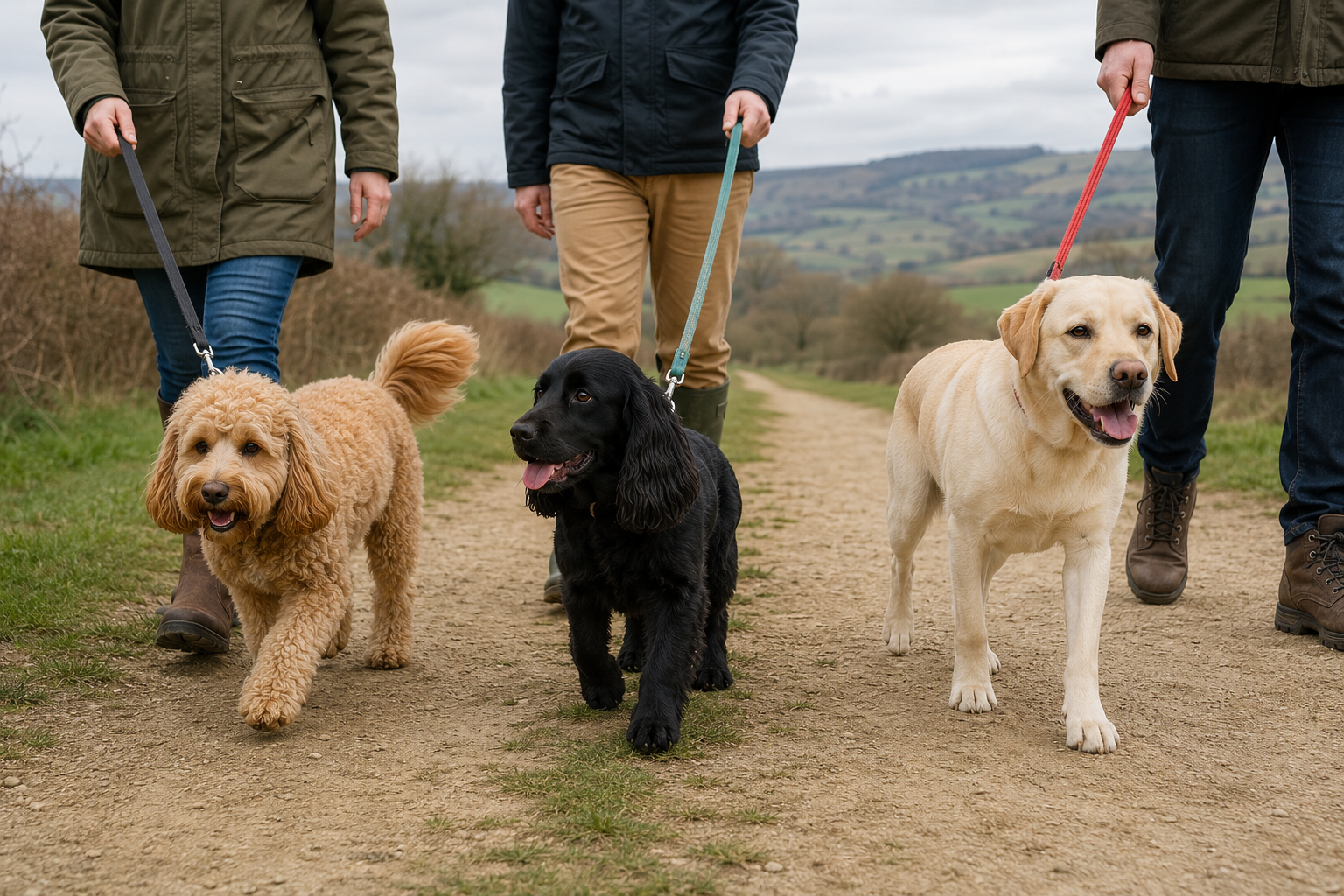
🐾 Harley hint: A lead can make pulling easier to manage, but it cannot teach loose-lead walking on its own. Pair the right lead with a comfortable harness and reward the moments your dog chooses to walk with you.
Harley Barley • Buying Guides
Five leads for better control — without the miracle claims
A good lead will not magically turn a determined puller into a heelwork champion, but it can give you a safer grip, clearer communication and a much less fraught walk. Our quick pick for focused loose-lead training is the Halti Control Lead; for straightforward everyday walking, the Taglory Rope Lead is the simpler option.
This article contains affiliate links. We may earn a small commission if you buy through them, at no extra cost to you. These are researched recommendations rather than a claim that Harley has personally tested every lead.
Our quick picks
| Best for | Lead | Main benefit | Link |
|---|---|---|---|
| Best for training | Halti Control Lead | Multiple handling and attachment options | Check on Amazon UK |
| Best simple fixed lead | Taglory Rope Lead | Straightforward everyday control | Check on Amazon UK |
| Best heavy-duty retractable | Flexi Giant L | Robust option for suitable open spaces | Check on Amazon UK |
| Best long retractable range | Flexi Xtreme L 8 m | Extra exploration distance | Check on Amazon UK |
| Best convenient retractable | Pecute with poo-bag holder | Handy all-in-one setup | Check on Amazon UK |
What type of lead is best for a dog that pulls?
For teaching a loose lead, start with a fixed-length or double-ended lead. It gives a consistent distance and makes the moment the lead becomes slack easier for both dog and owner to understand.
Retractable leads are better viewed as freedom tools for appropriate open spaces, not the first choice for teaching a determined puller. The mechanism maintains light tension, and reaching the end at speed can create a sudden jolt.
Look for:
- A comfortable handle you can hold securely
- Hardware suitable for your dog’s weight and strength
- Enough length for natural movement without creating a trip hazard
- Reflective details if you walk in low light
- Two clips if using a dual-attachment harness
1. Halti Control Lead — best for training
View the Halti Control Lead on Amazon UK
The Halti Control Lead is the most versatile choice in this group. A double-ended lead can connect to the front and back of a compatible harness, giving you guidance at the chest and stability across the body.
Good for: Loose-lead practice, dual-clip harnesses and owners who want several handling configurations.
Honest drawback: Two clips and extra length can feel fiddly until you find the setup that works.
Best matched with: One of our recommended harnesses for dogs that pull.
2. Taglory Rope Dog Lead — best simple fixed lead
View the Taglory Rope Dog Lead on Amazon UK
Sometimes uncomplicated is exactly what you need. A fixed rope lead offers a clear boundary and avoids the moving target created by a retractable mechanism.
Good for: Everyday pavement walks and consistent training.
Honest drawback: It gives less exploration range than a long line or retractable lead.
Who it suits: Owners who want a grab-and-go lead without multiple settings.
3. Flexi Giant L — best heavy-duty retractable option
View the Flexi Giant L on Amazon UK
The Flexi Giant L is designed as a more substantial retractable option. It may suit larger or stronger dogs on open routes where extra freedom is appropriate and the handler understands how to manage the brake.
Good for: Controlled exploration away from roads and crowds.
Honest drawback: It is not our first choice for loose-lead lessons or busy pavements.
Safety note: Attach retractable leads to a well-fitted back-clip harness, not a collar, to avoid a sudden stop loading the neck.
4. Flexi Xtreme L 8 m — best for longer exploration
View the Flexi Xtreme L 8 m on Amazon UK
Eight metres gives a dog meaningful sniffing room, which can be useful on open countryside paths where off-lead freedom is not suitable. With that freedom comes a greater need to scan ahead and use the brake early.
Good for: Sniff walks in safe, spacious areas.
Honest drawback: Eight metres is too much line near roads, cyclists, livestock or other walkers.
Who it suits: Attentive handlers wanting controlled range rather than close-position training.
5. Pecute Retractable Lead — best for convenience
View the Pecute Retractable Dog Leash on Amazon UK
The integrated poo-bag holder makes this a convenient option for everyday outings. It keeps one more walk essential attached to the thing you are least likely to forget.
Good for: Owners who value an all-in-one setup.
Honest drawback: Convenience does not remove the usual retractable-lead limitations around control and constant tension.
Who it suits: Calm dogs using the lead in open, suitable spaces.
Fixed, double-ended or retractable?
Fixed lead
Best for pavement walking and learning that slack lead equals forward movement. It is simple, predictable and easy to shorten temporarily without relying on a brake.
Double-ended lead
Best with a dual-clip harness. It spreads control between two points and can help guide a strong dog without concentrating pressure at the neck.
Retractable lead
Best for giving a reasonably calm dog extra sniffing space where visibility is good. It is not suitable for every route, and the thin extended tape or cord can be difficult for other people to see.
How should I hold a lead safely?
Put your hand through the handle and hold the lead securely without wrapping it around your fingers or wrist. Keep two hands available when you need extra control. Do not attach the lead around your waist unless it is designed for hands-free use and your dog is manageable.
Check the clip, stitching, tape and locking mechanism regularly. Replace a damaged lead before it fails, rather than after the dramatic roadside lesson.
Try this: Practise operating a retractable lead’s brake at home without your dog attached. You should be able to stop, lock and shorten it without looking down.
Will changing the lead stop pulling?
No lead teaches the skill by itself. Pair your chosen equipment with the calm stop-and-reward process in our guide to why dogs pull on the lead.
If your dog is powerful, lunges or pulls because they are frightened, a reward-based trainer can help you build a safer plan.
Frequently asked questions
What length lead is best for a dog that pulls?
A standard fixed-length lead is usually easiest for close walking and training. It should allow comfortable movement without leaving loops that can tangle.
Are bungee leads good for pullers?
They can soften sudden jolts, but the stretchy feedback may make a consistent slack-lead boundary less clear. They suit some walking or running setups better than early training.
Can I use a retractable lead with a harness?
Yes, on suitable open routes. Attach it to the back of a correctly fitted harness and avoid letting your dog hit the end at speed.
Should I use two leads for an escape-prone dog?
A double-ended lead or short safety connector between a secure harness and collar can add backup. Check both items fit properly and seek professional advice if escape behaviour is persistent.
Our verdict
Choose the Halti Control Lead for versatile training and the Taglory Rope Lead for simple everyday control. Keep retractable options for spacious routes where extra range is genuinely useful.
Responses