
The guide at a glance
| Topic | Key point |
|---|---|
| 🐾 The quick dog holiday checklist | This article contains affiliate links. |
| What should you pack for a dog-friendly holiday? | Start with the things your dog uses every day, then add anything needed for the journey, the weather and the type of accommodation. |
| 1. Collar, ID tag, harness and leads | Your dog’s collar and tag should be comfortable, secure and easy to read. |
| 2. Food, treats and travel bowls | Take enough of your dog’s usual food for the full trip, plus a little extra in case plans change. |
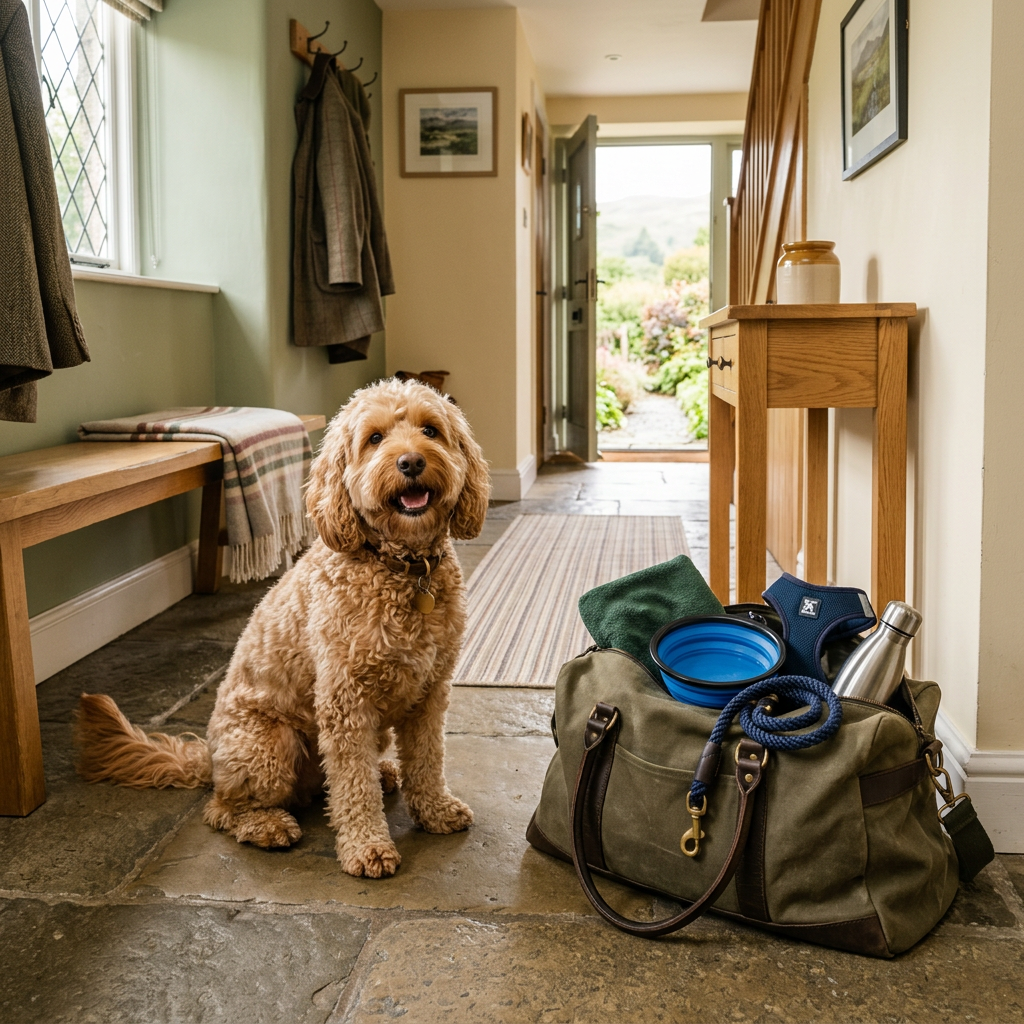
A dog-friendly holiday is much easier when the bag contains the things you will actually need — and not six toys, three matching bandanas and no poo bags. This practical UK packing list covers the everyday essentials, car kit, food, walk supplies and cottage clean-up bits worth checking before you leave.

🐾 Harley packing rule: Pack the boring essentials first — food, water, lead, harness, poo bags and towels — then add the nice-to-haves. Our long-walk packing list, walking essentials and Lake District dog walks are useful for planning the days once you arrive.
🐾 The quick dog holiday checklist
- Collar, ID tag, harness, lead and a spare lead
- Food, treats, bowls and plenty of water
- Bed or blanket and one or two familiar toys
- Poo bags, towel, wipes and a drying robe if you use one
- Any medication, insurance details and your vet’s number
- Car restraint or travel crate, plus a sunshade where needed
- Tick remover, basic first-aid supplies and paw-cleaning kit
This article contains affiliate links. If you buy through one of them, Harley Barley & Co may receive a commission at no extra cost to you. Commercial links are clearly labelled, and we only include them where they are relevant to the packing list.
What should you pack for a dog-friendly holiday?
Start with the things your dog uses every day, then add anything needed for the journey, the weather and the type of accommodation. A cottage week in Cumbria needs a different kit from one night in a city hotel, but the basics remain the same: safe travel, familiar food, somewhere comfortable to rest and enough clean-up equipment to cope with British weather doing what British weather does.
1. Collar, ID tag, harness and leads
Your dog’s collar and tag should be comfortable, secure and easy to read. In the UK, dogs in a public place must wear a collar with the owner’s name and address on it, subject to limited exceptions. A mobile number is sensible too, although it does not replace the required details.
Pack the walking set-up your dog already knows. Holidays are not the ideal time to discover that a new harness rubs after forty minutes. If you are reviewing your kit before travelling, our guides to dog harnesses for everyday adventures, leads for dogs that pull and harnesses versus collars will help you compare the options.
A spare lead is worth the tiny amount of bag space. Leads get dropped in streams, chewed in unfamiliar cottages and left on café hooks with impressive efficiency.
2. Food, treats and travel bowls
Take enough of your dog’s usual food for the full trip, plus a little extra in case plans change. Sudden food changes can upset some dogs, so a holiday is rarely the best time to improvise with whatever the nearest village shop stocks. Measure portions before leaving if that makes feeding simpler.
Bring separate food and water bowls. A collapsible bowl is useful on walks, while a sturdy everyday bowl is usually less likely to skid around the accommodation. Our dog bowl guide covers everyday, slow-feeder and travel styles.
Harley’s food routine
Harley has Pure Pet Food and enjoys it, while we like the convenience of the monthly delivery. If you are already considering it, read our honest Pure Pet Food review. You can also visit Pure Pet Food using Harley’s referral link and use code HARLEYTHECOCKAPOO. Check the current offer and product details on the retailer’s site.
3. Water for the journey and every walk
Do not rely on finding a tap exactly when you need one. Pack drinking water for the drive and carry it on longer walks, along with a portable bowl. Offer regular breaks and keep the water somewhere accessible rather than buried beneath the weekend bag.

4. Bed, blanket and familiar comforts
A familiar-smelling bed or blanket can help a dog understand where to settle in a new place. Pack one washable layer for the floor and, if practical, a spare for the car. One or two known toys are plenty; bringing the entire toy basket mostly guarantees you will spend departure morning searching under unfamiliar furniture.
For dogs who need something to do while everyone settles in, a familiar puzzle feeder can be useful. See our favourite dog puzzle toys and guide to mental stimulation for Cockapoos. Always supervise unfamiliar toys and count food used for enrichment towards the daily allowance.
5. Towels, wipes and muddy-dog supplies
At least one dog towel deserves a permanent place in the car. Add a drying robe if your dog already wears one happily, pet-safe wipes for small clean-ups, and a washable mat for the cottage doorway. A lidded bag for wet towels prevents the rest of your luggage slowly developing the scent of a rainy spaniel.
Our guide to cleaning a muddy dog after a walk has a simple door-to-bath routine. You can also browse Pets Villa via Harley’s affiliate link for dog-care and travel accessories; check suitability and current product information before ordering.
6. Poo bags — then pack more
Put a roll on the lead, one in the car and another in the main bag. Holiday routines are different, bins are not always where you expect them and discovering the empty cardboard tube at the wrong moment is a very specific kind of panic.
7. Medication and health information
Pack prescribed medication in its original packaging and take enough for the trip. Keep your regular vet’s contact details, insurance policy information and your dog’s microchip details easy to find. It is also worth locating the nearest daytime vet and out-of-hours service to your accommodation before travelling, particularly if you are staying somewhere rural.
A basic dog first-aid kit may include gauze, cohesive bandage, sterile saline, disposable gloves and a tick-removal tool. It is for immediate support, not a substitute for veterinary advice. Never give human medication unless a vet has specifically instructed you to do so.
8. Safe car-travel equipment
Rule 57 of the Highway Code says animals should be suitably restrained so they cannot distract the driver or injure themselves or others if the vehicle stops quickly. Depending on your dog and vehicle, that could mean a suitable seat-belt harness, pet carrier, dog cage or dog guard.
- Use equipment designed for your dog’s size and follow its instructions.
- Secure loose bags so they cannot fall onto your dog.
- Plan regular breaks on longer drives.
- Never leave a dog in a hot car.
- Keep leads attached before opening doors in unfamiliar places.
9. Accommodation protection kit
Even genuinely dog-friendly accommodation will have house rules. A throw for the sofa, an old sheet for the floor beneath the food bowls and a small lint roller can help you leave the property as you found it. Read the rules before arrival so you know whether dogs are allowed upstairs, on furniture or in shared gardens.
10. Walking and day-out extras
- Offline map or downloaded route
- Reflective or light-up accessories for darker walks
- Weather-appropriate coat if your dog normally uses one
- Paw balm only if it is already suitable for your dog
- Long line for appropriate open spaces — never beside roads or livestock
- A towel and water left in the car for the return journey
If Cumbria is on the itinerary, start with our guide to five easy dog walks in the Lake District, complete with maps and practical notes.
Before you set off
- Check the accommodation’s latest dog rules.
- Confirm microchip contact details are current.
- Photograph your dog’s medication labels and insurance details.
- Save the nearest vet and out-of-hours number.
- Check the weather and adjust the walking plan.
- Do one final collar-tag-and-poo-bag check.
Frequently asked questions
How much dog food should I take on holiday?
Take the normal amount needed for every planned meal, then add a modest buffer for delays or changes of plan. Keep portions and feeding instructions clear if anyone else may feed your dog.
Should I take my dog’s own bed?
If space allows, yes. A familiar bed or blanket gives your dog a recognisable resting place and helps protect accommodation furnishings. Choose something washable and easy to dry.
What documents do I need for a UK dog holiday?
For travel within Great Britain, most everyday trips do not require a pet travel document. Still keep identification, microchip, insurance, medication and veterinary details accessible. Requirements differ for Northern Ireland, the Republic of Ireland and international travel, so check current official guidance for the exact route well before departure.
How do I help my dog settle in holiday accommodation?
Keep the first hour calm, offer water, show them their bed and take them out for a toilet break. Maintain familiar meal and walk times where practical, and do not leave a dog alone in a new property unless the accommodation permits it and you already know they cope comfortably.
The final word
The best dog-holiday packing list is not the longest one. It is the one that keeps your dog safe, comfortable, fed, watered and reasonably mud-contained. Pack the familiar essentials first, add the equipment needed for your specific plans, and leave a little room for the inevitable souvenir toy.
Affiliate disclosure: marked commercial links may earn Harley Barley & Co a commission at no extra cost to you. Product availability and offers can change. Always check current retailer information and choose items suitable for your individual dog.