
The short answer
Puppies need several short bursts of gentle activity, training and free play rather than one exhausting walk. Increase exercise gradually as confidence and stamina develop, but avoid long hikes, running beside you, repeated jumping, sharp turns and relentless ball chasing while joints are still maturing. Age matters, but so do breed, expected adult size, health, terrain and how your puppy behaves during and after exercise.
In this guide
- A realistic puppy exercise chart by stage
- What the five-minute rule gets right and wrong
- Safe walking, play and mental enrichment
- Activities to postpone until your puppy is mature
- Signs your puppy needs more rest
- Lake District walking considerations
Puppy exercise chart by age
This chart is a starting framework, not a prescription. A calm sniff walk on soft ground places different demands on a puppy from running, skidding or climbing steep steps. Let quality, intensity and recovery guide you as much as minutes.
| Age or stage | Good exercise choices | Main priority |
|---|---|---|
| 8–12 weeks | Home and garden play, handling, tiny training sessions and safe socialisation | Confidence, sleep and positive experiences |
| 3–4 months | Short exploratory walks after veterinary vaccination advice, free play and scent games | Learning about the world without overloading them |
| 4–6 months | Several short walks, recall practice, varied gentle surfaces and play with breaks | Gradually building coordination and stamina |
| 6–12 months | Longer sniff walks introduced steadily, training and controlled play | Managing adolescent enthusiasm and impact |
| 12–24 months | Progress towards adult activities when physically mature | Breed-appropriate fitness built step by step |
Is the five-minute puppy exercise rule accurate?
You may have heard that a puppy should receive five minutes of formal exercise for every month of age, up to twice daily. It is easy to remember, and it can discourage very long walks, but it is not a scientifically proven limit.
PDSA’s puppy exercise guidance states that there is no scientific evidence behind the rule and that it will not suit most puppies. Their vets recommend considering age, size, breed and lifestyle, limiting high-impact activity and building walking stamina gradually.
Use the rule as a reminder to keep outings manageable, not as a target or a hard cut-off. Ten minutes of frantic chasing and skidding may be more demanding than a longer, slow exploration with plenty of sniffing and pauses.
🐾 Harley’s Hint
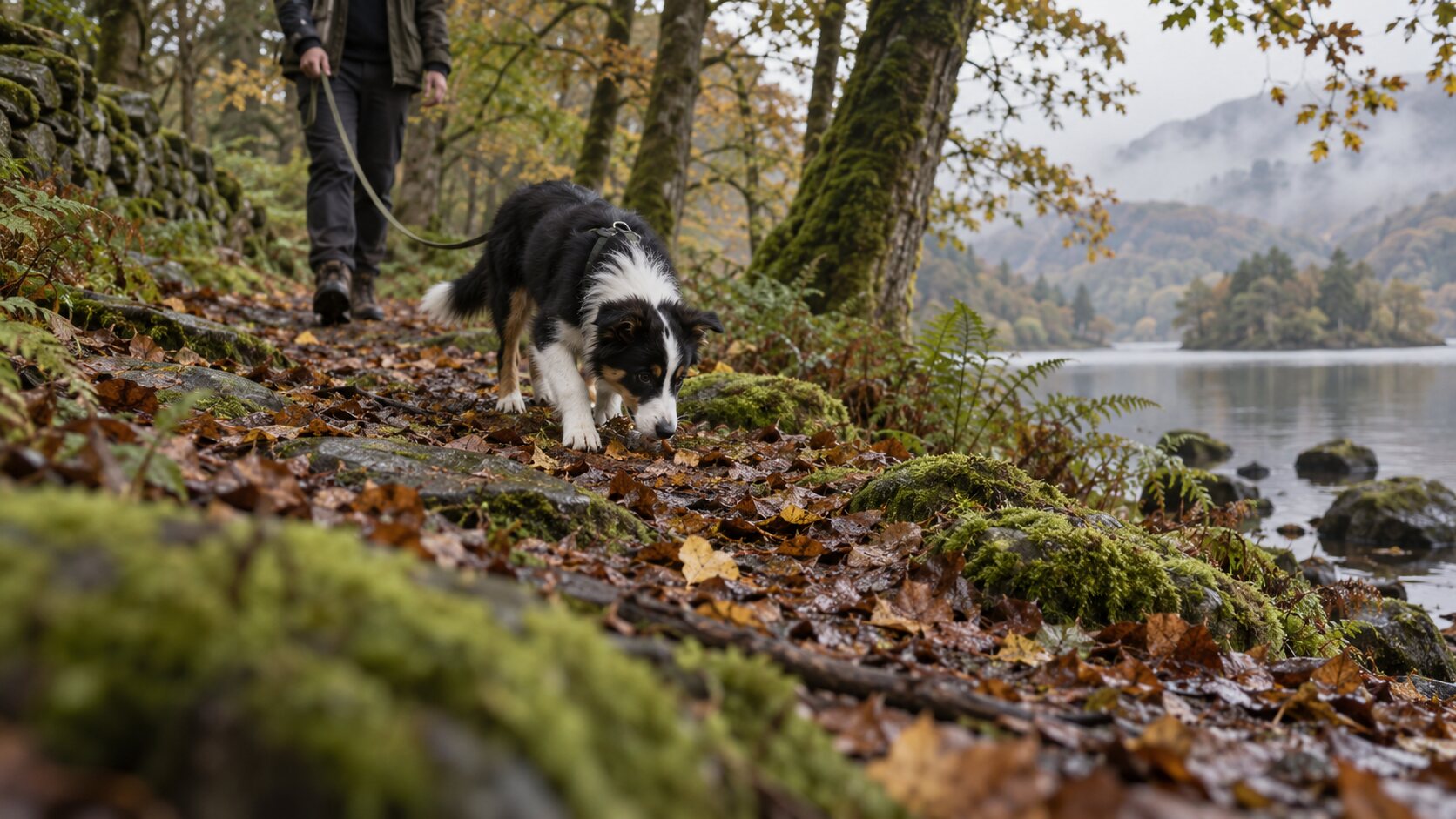
Living in the Lake District makes it tempting to head straight for a “proper” walk. With a puppy, a slow woodland sniff near home can offer far more than chasing distance or a summit. Save the big fell days until your dog has matured and built fitness gradually.
What counts as exercise for a puppy?
Short, sniff-led walks
Puppy walks are about sights, sounds, smells and confidence—not completing a route. Let your puppy stop and investigate. Choose quiet places, keep the lead loose and turn back while they still have energy. Before public walks, follow your vet’s advice about vaccinations and local disease risk.
Self-directed play
Free play at home or in a secure garden allows a puppy to pause naturally. Gentle tug, exploring cardboard boxes and playing with suitable toys can all count. Keep sessions short and interrupt if play becomes frantic, slippery or overly physical.
Training and scent work
A few minutes of recall, name response, settling or finding scattered food can be mentally tiring without repetitive impact. Use part of the puppy’s normal daily food allowance where possible. For higher-distraction practice, our guide to recall-training treats explains how to choose reward value and portion size.
We have used Fidelis treats with Harley. Their Mini Chicken Training Bones (affiliate link) are one existing option for reward-based sessions; check ingredients for your puppy and keep treats within a balanced daily allowance.

How to build puppy walks safely
- Begin somewhere easy. Pick a short, quiet route with an obvious turning point and an easy way home.
- Watch the surface. Grass, woodland paths and firm level tracks are usually kinder than long stretches of hard pavement or slippery stone.
- Pause often. Sniffing and observing are useful; there is no need to keep marching.
- Add one variable at a time. Increase distance, terrain difficulty or stimulation—not all three together.
- Review recovery. Notice how your puppy moves, settles and behaves later that day and the following morning.
Use a comfortable, correctly fitted harness or collar and check the fit frequently because puppies grow quickly. Our comparison of harnesses and collars for walking covers comfort, control and UK identification requirements. For everyday supplies, see our dog-walking essentials checklist.
Exercise to avoid while your puppy is growing
- Running alongside a bicycle or accompanying you on sustained road runs
- Long hikes before stamina and physical maturity are established
- Repeated jumping from cars, furniture or high steps
- Fast, repetitive ball throwing with abrupt stops and turns
- Slippery-floor zoomies and games that cause frequent skidding
- Forced exercise where the puppy cannot choose to slow down
- Adult agility heights or repetitive impact drills
This does not mean wrapping a puppy in cotton wool. Appropriate movement helps build confidence, coordination and fitness. The aim is to limit repetitive, high-impact or endurance activity while still allowing varied, enjoyable daily movement.
Signs your puppy may have done too much
- Lagging behind, repeatedly sitting or lying down
- Heavy panting that does not settle normally after a break
- Becoming unusually bitey, frantic or unable to switch off
- Stiffness, reluctance to get up or a changed gait later
- Limping, yelping or avoiding weight on a limb
- Being unusually quiet or unwilling to exercise the next day
Some excited puppies will continue long after they are tired, so do not rely on them to stop. End on a calm note and protect rest time. Contact your vet if your puppy limps, appears painful, is suddenly reluctant to move or has symptoms that concern you. Never give human painkillers.
🐾 Harley’s Hint
Cockapoo enthusiasm can make “still going” look like “still comfortable”. Build a quiet decompression period into the plan. If a puppy returns home wild, mouthy and unable to settle, the answer may be more rest—not another lap around the block.
Puppy exercise in the Lake District
Lake District routes can be deceptively demanding. A short distance may include steep gradients, uneven rock, stiles, livestock and boggy ground. Start with level lakeshore, village or woodland options where turning back is easy. Keep puppies under close control around livestock and follow local signs.
Check the weather and terrain rather than assuming a familiar adult-dog route suits a puppy. Wet stone can be slippery, warm days increase heat risk and exposed paths can change quickly. Our guide to easy Lake District dog walks can help with ideas, but shorten any route to match your puppy rather than trying to complete the full walk.
Frequently asked questions
Can I take my puppy for a walk before vaccinations?
Ask your vet because timing and local disease risk matter. Before they advise public ground is safe, use home and garden play, training, carried outings and carefully managed contact with healthy, vaccinated dogs in suitable private spaces.
Are stairs bad for puppies?
Occasional controlled steps are different from repeatedly charging up and down a full staircase. Prevent unsupervised repetition and slipping, especially for very young, long-backed or larger-breed puppies. Ask your vet for individual advice if your home requires frequent stair use.
When can a puppy go hiking or running?
Wait until your dog is physically mature and your vet is happy with the plan, then build fitness gradually. Maturity varies considerably: some larger breeds continue growing well beyond their first birthday.
Does an energetic puppy need longer walks?
Not necessarily. More mileage can create an overtired puppy or simply build greater endurance. Combine appropriate movement with sniffing, training, chewing and sleep. Our indoor enrichment guide has low-impact ideas.
The best exercise plan grows with your puppy
A useful plan is varied, gradual and responsive. Give your puppy chances to sniff, learn, play and rest; avoid turning every outing into a distance challenge. Watch the whole dog during the activity and afterwards, and adapt for their breed, size, health and maturity. When in doubt—particularly before hiking, running or starting a dog sport—ask your vet.