
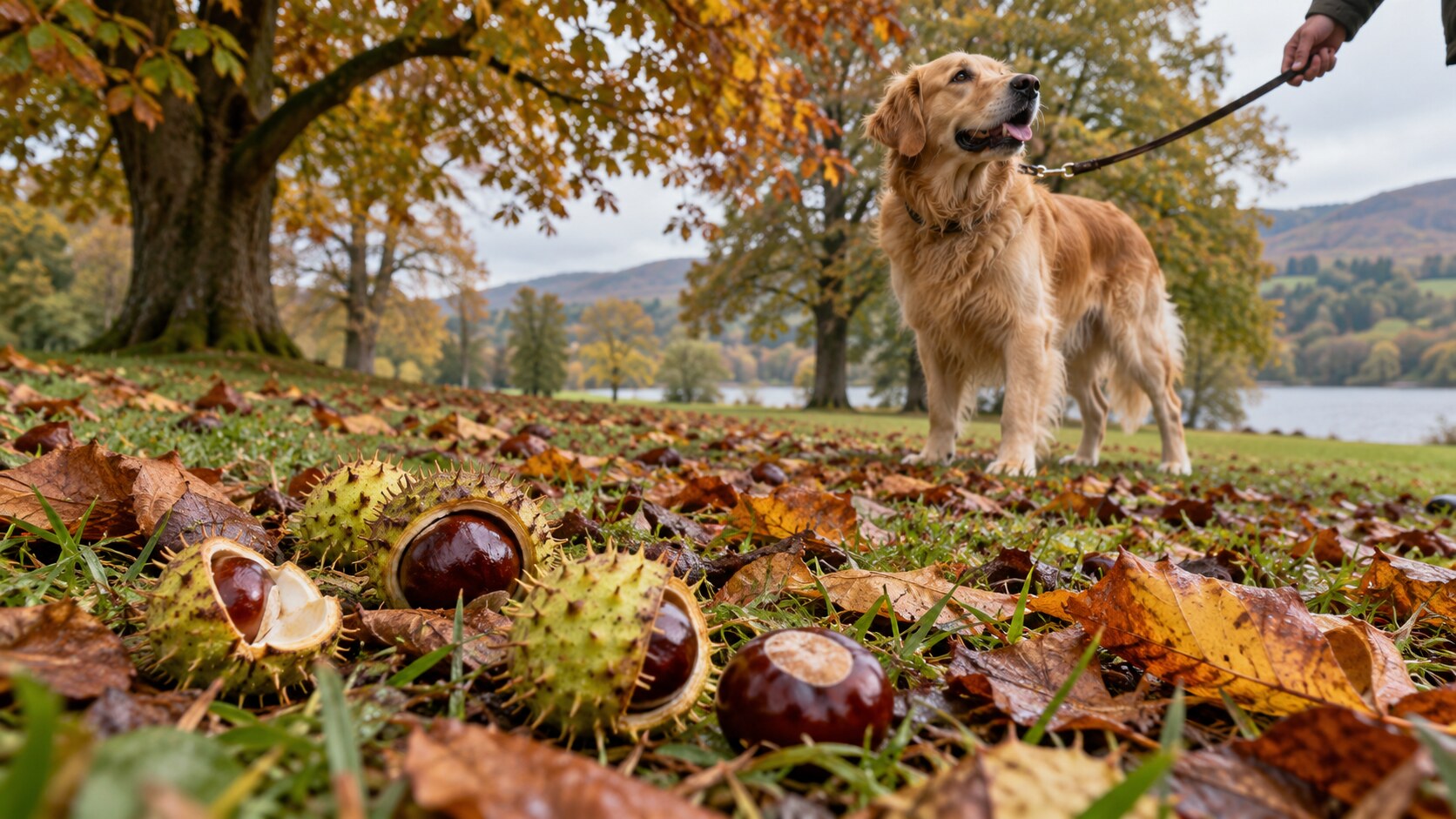
Yes, conkers are poisonous to dogs. Horse chestnut seeds contain aesculin, which can cause illness, and their size and hardness also create choking and intestinal-blockage risks. If your dog has chewed or swallowed a conker, phone your vet straight away—even if they currently look well. Do not wait for symptoms and never try to make them vomit unless a vet specifically instructs you.
In this guide
- Why conkers are dangerous to dogs
- Symptoms of conker poisoning and blockage
- What to do immediately after a suspected ingestion
- How to recognise conkers and reduce the risk on autumn walks
- Answers to common conker-safety questions
Conkers and dogs: what to do at a glance
| What happened? | What to do |
|---|---|
| Your dog sniffed a conker but did not pick it up | Move on, keep watching them and avoid areas with heavy conker fall. |
| Your dog chewed a conker or may have swallowed some | Call your vet immediately. Share the likely time, amount and any symptoms. |
| Your dog swallowed a whole conker | Contact your vet straight away because poisoning and gut blockage are both possible. |
| Your dog is choking, collapsing, having a seizure or struggling to breathe | Call the nearest emergency vet while travelling there. This is an emergency. |
| You are unsure what your dog picked up | Photograph the object and location, prevent further access and phone your vet for advice. |
Why are conkers poisonous to dogs?
Conkers are the shiny brown seeds of the horse chestnut tree. All parts of the tree—including the seeds, leaves, bark and flowers—contain aesculin. A dog that chews a conker can therefore be exposed to a natural toxin.
Poisoning is not the only concern. A whole conker is firm, smooth and just the sort of size that can lodge in a dog’s throat or digestive tract. Pieces can also create a blockage, particularly in a smaller dog or puppy. That means there is no reliable “safe number” of conkers for a dog to eat.
Blue Cross advises contacting a vet immediately after suspected ingestion. Symptoms may begin within one to six hours, although they can sometimes be delayed for up to two days. Waiting for obvious illness can lose valuable time.
Possible symptoms
- Vomiting, diarrhoea or excessive drooling
- Abdominal pain, restlessness or a hunched posture
- Loss of appetite
- Weakness, wobbliness or unusual tiredness
- Tremors, collapse or seizures in a severe case
- Repeated retching, straining or an inability to keep food down, which may suggest an obstruction
These signs can have many causes, so do not try to diagnose poisoning at home. Tell the vet what you saw and follow their instructions.
🐾 Harley’s Hint: On Lake District walks, wet leaves can hide conkers surprisingly well. Save your usual vet and nearest out-of-hours practice in your phone before setting off, especially where the signal can be patchy.
What to do if your dog eats a conker
- Stop further access. Calmly move your dog away and collect any nearby pieces only if it is safe.
- Phone your vet immediately. If your practice is closed, use its recorded message or website to find the emergency provider.
- Share useful facts. Give your dog’s approximate weight, the time it happened, whether the conker was whole or chewed, the possible amount and any symptoms.
- Photograph the evidence. A picture of the seed, case, leaf or remaining pieces can help with identification. Take a sample only when it can be handled safely.
- Follow professional instructions. The vet will decide whether monitoring, examination, treatment or imaging is appropriate.

Do not give salt, oil, milk, activated charcoal or another home remedy. Do not put your fingers into a conscious dog’s mouth or attempt to make them vomit. These actions can cause additional harm. Our broader guide explains what to do when a dog eats something on a walk, while a sensible dog first-aid kit for walks can help you organise essentials without replacing veterinary care.
How to identify a conker
A horse chestnut conker is usually rounded and glossy brown with a broad pale patch. Its green outer case has fewer, shorter spikes than the very densely spined burr around an edible sweet chestnut. Horse chestnut leaves are large and hand-shaped, with several leaflets spreading from one point.
Identification should never delay a call to the vet. Even if an object turns out not to be a conker, a hard seed, nut, stone or fruit kernel may still cause choking or obstruction. If in doubt, treat the event as potentially urgent.
How to stop your dog picking up conkers
Conkers are most common beneath horse chestnut trees in early autumn. They can roll across paths, disappear into leaf litter and look temptingly like little balls. A few practical habits make walks safer:
- Use a lead or long line through areas where many conkers have fallen.
- Scan the path ahead and choose a clearer route after wind or heavy rain.
- Practise “leave” and “drop” with safe objects at home before relying on the cues outdoors.
- Reward an exchange instead of chasing your dog, which can turn swallowing into a game.
- Clear conkers from your garden and supervise children collecting them around pets.
- For a persistent scavenger, ask a qualified trainer or behaviourist about positive basket-muzzle training.
Small, appealing rewards can help build a strong leave cue. Fidelis Mini Chicken Training Bones (affiliate link) are one option already featured in our training guides. Choose rewards that suit your dog and count them within the day’s food. You can also compare ideas in our guide to the best dog treats for recall training.
🐾 Harley’s Hint: Never throw conkers for a game of fetch. Carry a familiar ball or toy instead, plus a few rewards for calm check-ins. Our long dog-walk packing guide has a useful checklist.
Are acorns dangerous too?
Yes. Acorns contain tannins that can upset a dog’s stomach, and they can also cause choking or a blockage. Autumn brings other risks too, including some mushrooms, discarded food and fallen fruit. Keep unknown items out of reach and use our Can Dogs Eat It? checker as a starting point for everyday foods—not as a substitute for urgent veterinary advice.
Frequently asked questions
Can one conker poison a dog?
There is no dependable safe amount. Risk depends on the dog’s size, what was swallowed and how much was chewed, while even one whole conker may obstruct the gut. Call your vet after any suspected ingestion.
How quickly will symptoms appear?
Blue Cross says signs commonly appear within one to six hours, but they may be delayed for up to two days. A blockage can also take time to become obvious, so prompt advice matters even when your dog seems normal.
Can dogs play with conkers?
No. A dog can accidentally swallow a conker during play, and biting it exposes the toxic interior. Use a dog-safe toy that is appropriately sized and in good condition.
Should I make my dog sick?
No. Inducing vomiting without veterinary direction can be dangerous. Call your vet and do only what they advise.
What if my dog only held a conker in their mouth?
If it was definitely dropped intact, prevent another attempt and monitor closely. If there are tooth marks, missing pieces or any doubt about swallowing, contact your vet immediately.
The bottom line
Conkers are a familiar part of a British autumn, but they are not safe toys or snacks for dogs. Keep your dog away from fallen seeds, practise a positive leave cue and carry a suitable alternative for games. If chewing or swallowing happens, remove access and call your vet straight away rather than waiting for symptoms.
This guide is general information and does not replace advice from your vet. If you think your dog has eaten a conker or is unwell, contact a veterinary professional promptly.