
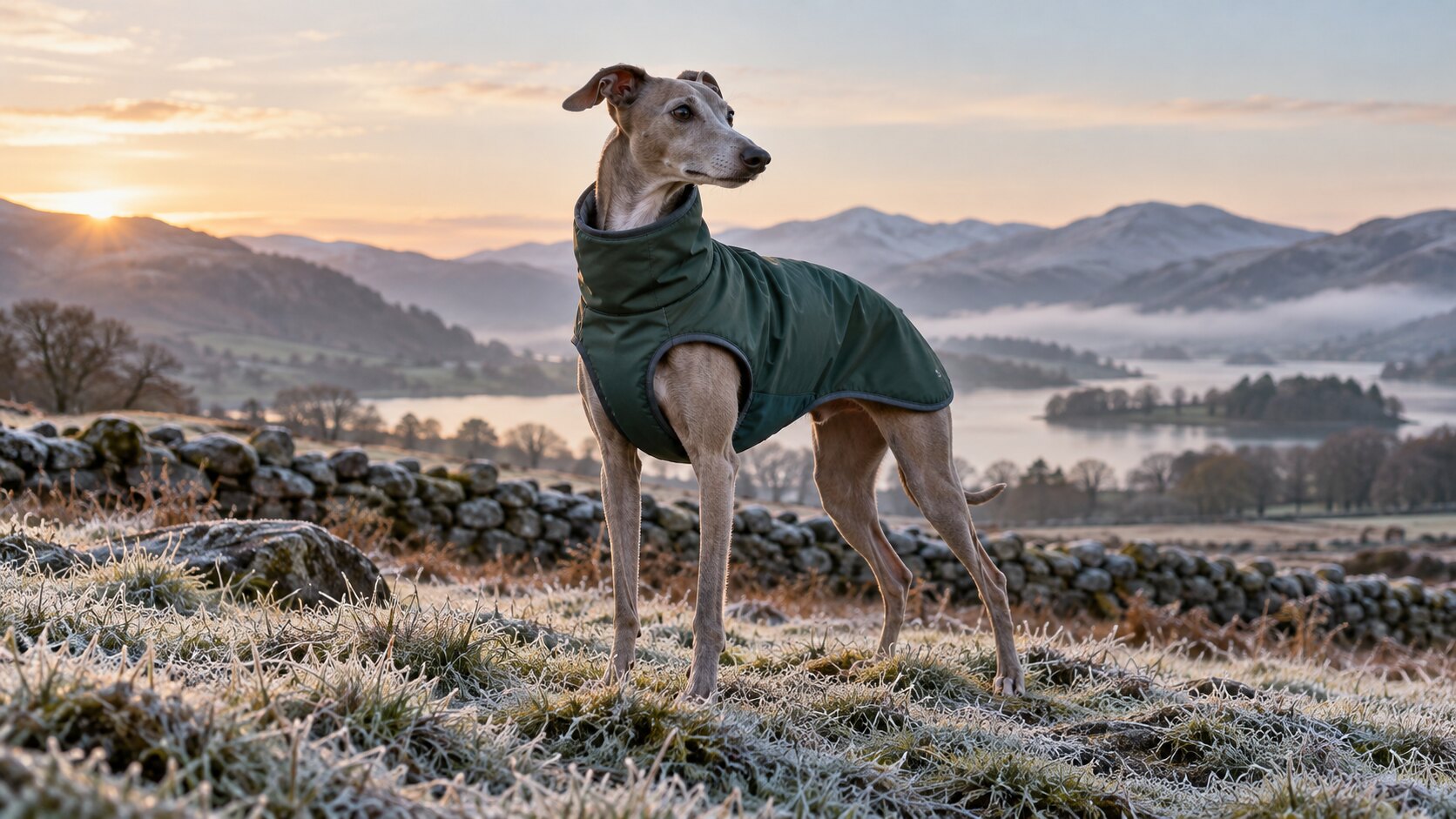
Not every dog needs a coat in winter, but some genuinely benefit from one. Small dogs, short-haired breeds, puppies, older dogs and dogs that are unwell, underweight or moving slowly can lose heat more quickly. The decision should be based on your dog, the conditions and how long you will be outside—not on one universal temperature.
In this guide
- Which dogs are most likely to need a coat
- How weather, exercise and coat type change the answer
- Signs that your dog is cold—or becoming too warm
- Waterproof, insulated and drying coats compared
- How to measure, fit and introduce a coat
- Winter walking checks and FAQs
Dog winter coats at a glance
| Dog or situation | Likely coat need | What to consider |
|---|---|---|
| Healthy double-coated adult | Often unnecessary | May already have effective insulation; avoid overheating |
| Small or very short-haired dog | Often helpful | Especially in cold wind, rain or during slower walks |
| Puppy or senior dog | May be helpful | Monitor closely and keep outings appropriate |
| Wet dog | Weather protection can help | Dry the dog properly afterwards; do not trap dampness |
| Fast, active dog | Depends | Exercise generates heat, so check beneath the coat |
| Dog recovering from illness or surgery | Ask your vet | Individual health needs matter more than a general guide |
Which dogs feel the cold most?
Breed is only a starting point. Body size, age, weight, health, natural coat and activity level all affect how comfortably a dog copes. The PDSA explains that many dogs cope well in cold weather, while some need extra warmth.
- Small dogs: they have more surface area relative to their body mass and may cool more quickly.
- Short or fine-coated breeds: dogs such as Greyhounds and Whippets have less natural insulation.
- Puppies: young dogs may regulate their temperature less effectively and should not be kept outside simply to “toughen them up”.
- Older dogs: reduced mobility and age-related health changes can make winter harder.
- Lean or underweight dogs: less body fat can mean less insulation.
- Unwell dogs: ask your vet for advice if illness, medication, surgery or a skin problem could affect temperature control.
🐾 Harley’s Hint
Lake District weather can change during one walk. We think about wind and rain as well as the number on the thermometer, and we check how Harley actually feels rather than assuming his curly coat tells the whole story.
There is no single “coat temperature”
A calm ten-minute toilet break, a brisk fell walk and an hour waiting beside a football pitch are very different. Wind strips away warmth, rain flattens insulating fur and standing still produces less body heat than exercise. A dog that is comfortable at the start may become wet and cold later—or become too warm once running.
Use temperature as one clue, then consider wind chill, rain, ground conditions, route exposure and how easy it is to turn back. The RSPCA’s winter guidance also emphasises keeping pets safe and warm as days become colder and darker.
Signs your dog may be too cold
- Shivering or trembling
- Lifting paws repeatedly
- Hunching, tucking the tail or making the body look small
- Slowing down, stopping or trying to turn home
- Seeking shelter or pressing close to you
- Appearing unusually anxious, subdued or reluctant to continue
Do not keep walking to test whether your dog “gets used to it”. Move somewhere warm and dry, remove wet items and contact a vet promptly if your dog seems weak, confused, very sleepy, uncoordinated or does not improve. Severe cold exposure is an emergency.
Signs a coat is making your dog too warm
A winter coat is not automatically harmless. Heavy insulation can trap heat during energetic exercise, particularly on dogs with dense natural coats. Watch for persistent panting, slowing down, seeking shade, agitation or very warm skin beneath the coat. Stop, remove the extra layer and let your dog cool gradually.
Waterproof, insulated or drying coat?
Waterproof shell
A light rain shell reduces how quickly fur becomes saturated. It can suit mild but wet conditions when warmth is not the main problem. Breathable fabric and good shoulder movement matter more than bulk.
Insulated winter coat
This adds warmth and may suit short-haired, small, older or slower-moving dogs. Choose insulation appropriate to the activity: the thickest coat is not automatically the best.
Drying coat
A drying coat is designed to absorb moisture after a wet walk, not necessarily to repel weather outside. Our drying coats versus towels guide explains the difference. An absorbent option such as the Bailey & Buddies dog towels (affiliate link) can also be kept by the door for the first wipe-down.

How to fit a dog coat properly
- Measure the back: from the base of the neck to the base of the tail while your dog stands naturally.
- Measure the chest: around the widest part of the ribcage.
- Use the maker’s chart: sizes are not consistent between brands.
- Check the neck: it should not press on the throat or pull backwards.
- Watch the shoulders: your dog should walk, trot and turn without shortened steps.
- Inspect straps: nothing should rub the armpits or twist underneath.
- Confirm toileting clearance: the coat must remain clean and allow normal movement.
Try the coat indoors first for a minute or two, pairing it with calm praise and rewards. Increase the time gradually. If your dog freezes, scratches continuously, bites the fabric or refuses to move, remove it and reassess the fit and design rather than dragging them outside.
🐾 Harley’s Hint
Recheck the fit once the coat is wet and after a few minutes of movement. Fabric can shift on a lively dog, so the comfortable-looking hallway fit is only the first test.
A practical winter walk routine
- Check the forecast and choose a route with an easy way back.
- Use a secure harness or collar and add visibility on dark days; our reflective and LED walking guide covers the options.
- Put the coat on immediately before leaving rather than letting your dog overheat indoors.
- Feel beneath the coat during longer walks, especially after running.
- Rinse road salt and grit from paws, then dry carefully between the toes.
- Remove wet clothing at home and hang it to dry completely.
For muddy, wet conditions, combine this with our after-walk cleaning routine and dog paw balm guide. A coat protects only the areas it covers; paws, lower legs and the underside may still need attention.
Frequently asked questions
Do Cockapoos need coats in winter?
Some do and some do not. A Cockapoo’s coat varies considerably, and grooming can leave it shorter at certain times. Consider the individual dog, weather, activity and signs of discomfort rather than relying on the breed name.
Should a dog wear a coat in the snow?
A waterproof or insulated coat can help dogs that feel the cold, but snow does not mean every dog needs one. Keep outings sensible, prevent snow clumps building in long fur and clean paws after contact with grit or de-icing products.
Can a dog wear a coat indoors?
Usually it should come off indoors so your dog can regulate their temperature and the skin can breathe. A vet may advise differently for a particular medical or post-operative need.
Can a dog sleep in a winter coat?
A walking coat is not designed as unattended sleepwear. Straps can shift, fabric can become too warm and dampness may be trapped. Provide a dry, draught-free bed instead unless your vet gives specific advice.
The bottom line
The right question is not simply “How cold is it?” but “How is this dog coping in these conditions?” A well-fitted coat is useful protection for dogs that need it. It should never restrict movement, replace sensible route choices or stay on when it is making the dog hot or uncomfortable.
This guide provides general information and does not replace veterinary advice. Contact your vet if illness, age, weight, skin problems or medication may affect your dog’s ability to regulate body temperature.