
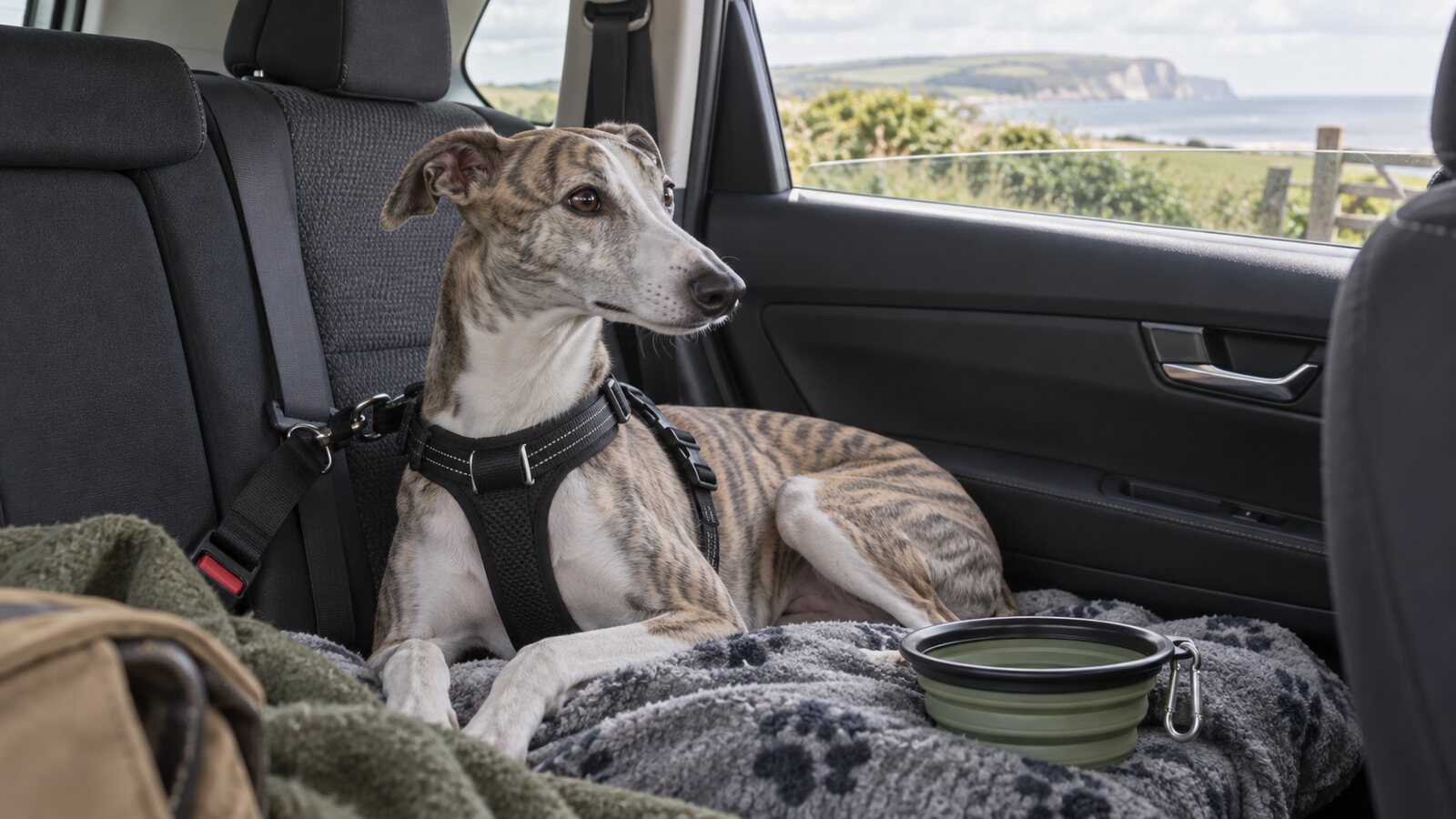
Car confidence is worth building before you need it. We travel around the Lake District with Harley, where journeys often involve winding roads, sudden stops and limited places to pull over safely.
In this guide
- Early signs to watch for
- Sickness versus anxiety
- A gradual training plan
- What to ask your vet
- How to prepare the car
Drooling, lip licking, whining and vomiting can turn even a short car journey into a miserable experience. Travel sickness is common in younger dogs, but anxiety can also make symptoms worse.
Speak to your vet
Repeated vomiting, severe distress or a sudden new problem deserves veterinary advice. Never give human anti-sickness medicine unless your vet has specifically prescribed it for your dog.
Signs of travel sickness
- Excessive drooling or repeated swallowing.
- Lip licking, yawning, whining or restlessness.
- Vomiting or diarrhoea.
- Reluctance to approach or enter the car.
Why dogs become car sick
Movement can disturb the balance system in the inner ear, particularly in puppies. Some dogs then learn to associate the car with feeling ill, so anticipatory anxiety adds another layer.
Practical steps that may help
- Start with the parked car, rewarding calm behaviour.
- Build from very short journeys rather than attempting a holiday immediately.
- Keep the vehicle cool and drive smoothly.
- Secure your dog safely using an appropriate tested restraint or crate.
- Ask your vet how to time meals before travel; individual advice matters.
Create a calmer association
Visit the car without driving, then take tiny trips that end somewhere pleasant. Stop before your dog becomes highly distressed. If progress stalls, a qualified reward-based behaviourist can help alongside your vet.
Prepare for the journey
Pack water, towels and cleaning supplies using our UK dog holiday checklist. The aim is safety and gradual confidence, not simply pushing through.
For more veterinary guidance, read the PDSA’s advice on motion sickness in dogs.
Travel sickness or travel anxiety?
| More suggestive of nausea | More suggestive of anxiety |
|---|---|
| Drooling after movement begins | Avoiding the car before it moves |
| Repeated swallowing or lip licking | Panting or trembling while parked |
| Vomiting on winding journeys | Distress linked to a previous journey |
| Improves when the car stops | May continue despite no movement |
Dogs can experience both at once. Recording when signs begin helps your vet and behaviour professional understand the pattern.
🐾 Harley’s Hint
For Lake District drives, we plan around the winding sections rather than total mileage. A short route over twisty roads can be harder than a longer, smoother journey, so we build in a calm break before Harley becomes unsettled.
A seven-step confidence plan
- Let your dog explore the stationary car with doors open.
- Feed treats or a meal near the car without travelling.
- Sit together briefly with the engine off.
- Repeat with the engine running if your dog remains relaxed.
- Drive for one or two minutes and return home.
- Take short journeys to pleasant, low-pressure places.
- Increase duration gradually, returning to an easier step after any setback.
Prepare the vehicle
Use a secure, suitable restraint and make the surface non-slip. Keep the temperature comfortable, remove strong air fresheners and prevent your dog from leaning out of an open window. Carry towels and water, but keep loose objects secured.
When veterinary help matters
Your vet can rule out other illness and may prescribe medication when appropriate. Seek advice before a necessary long trip rather than experimenting on the day. Sudden sickness in a dog who previously travelled comfortably should also be checked.
🐾 Harley’s Hint
We keep Harley’s car setup consistent—the same secure place, blanket and calm routine. Predictability is often more useful than adding lots of exciting toys.
Frequently asked questions
Do puppies grow out of car sickness?
Many improve as their balance system matures, but repeated frightening journeys can create a lasting negative association. Gentle practice is worthwhile even if physical nausea is likely to improve.
Should a dog travel on an empty stomach?
There is no single rule for every dog. A large meal immediately before travel may worsen nausea, but withholding food may be unsuitable for some puppies or medical conditions. Ask your vet for individual timing advice.
Does opening the window help?
Fresh, cool air can be useful, but a dog must never travel with their head outside. Open windows only enough for ventilation and ensure the restraint prevents access.
Where should a dog sit?
Use a secure crate, carrier, guard or suitable restraint appropriate to the dog and vehicle. The Highway Code requires dogs to be suitably restrained so they cannot distract the driver or cause injury.
Clean-up without creating fear
If sickness happens, stay calm and avoid scolding. Move the dog somewhere safe, clean the area thoroughly and make the next training session much easier. Strong residual smells can become part of the negative association.
Keep a journey record
Note the route, duration, road type, meal timing and first sign observed. A short record is more useful to your vet than trying to remember several journeys later.