
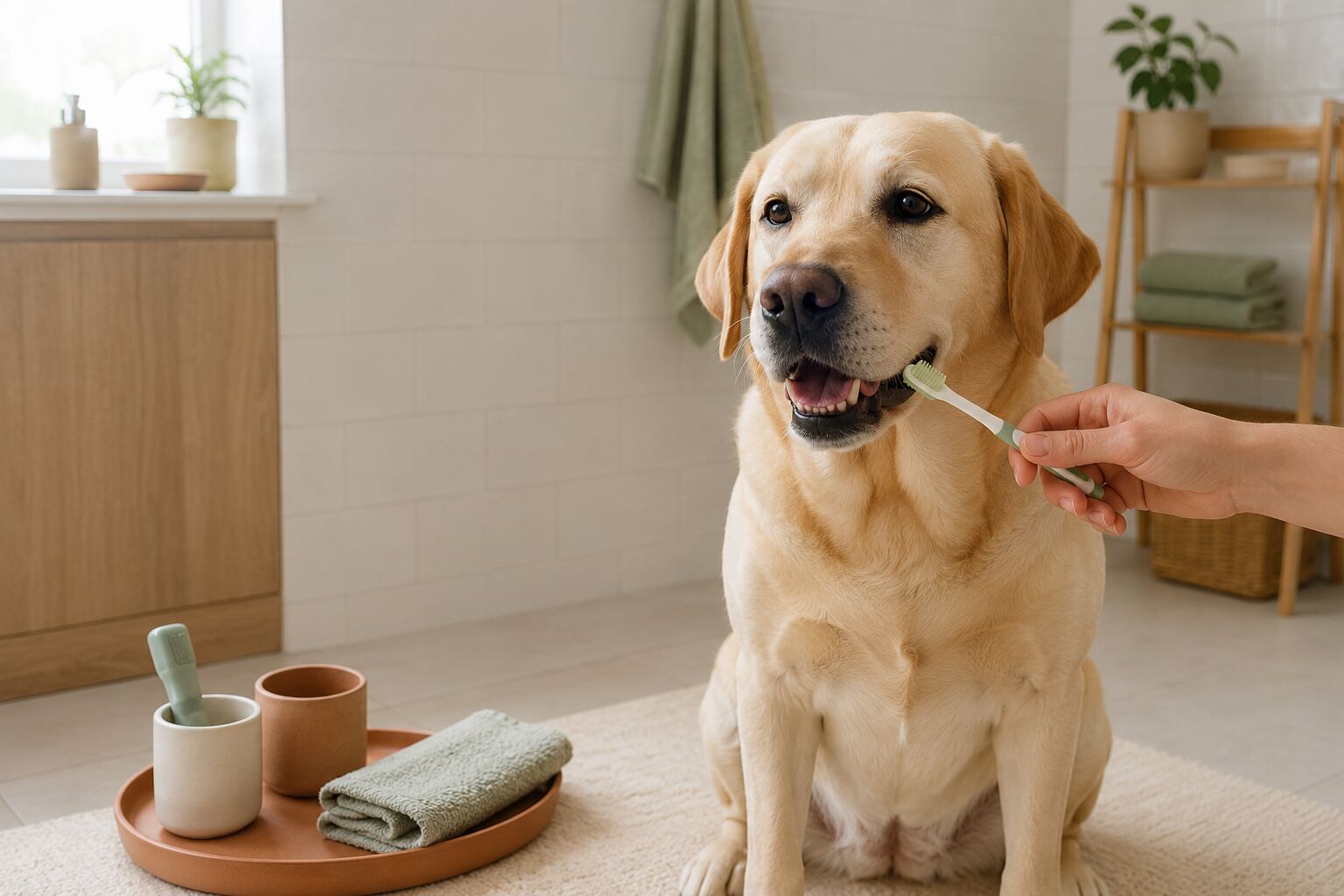
Most owners know they should care for their dog’s teeth. The difficult part is turning that knowledge into a routine—especially when the dog treats a toothbrush like an enemy.
🐾 Harley hint: The best dental routine is the one you can actually repeat. Start small, keep sessions calm and do not rely on chews alone. If your dog enjoys chewing, compare options in our long-lasting dog chews guide; for everyday food choices, our Pure Pet Food review explains what Harley currently eats.
The most effective plan is not the most elaborate. It is the one you can repeat consistently while still checking for problems that need professional treatment.
The short answer: what is a good dog dental routine?
A practical routine includes:
- Regularly checking your dog’s mouth
- Gradually teaching them to accept handling
- Brushing with dog-safe toothpaste when tolerated
- Using supportive products where appropriate
- Providing suitable chewing opportunities
- Booking veterinary checks and treatment when needed
Home products can support oral hygiene, but they cannot remove advanced tartar, repair damaged teeth or treat infection.
Start by checking—not scrubbing
Lift your dog’s lip for a second, reward them and stop. Gradually build until you can look along the gumline without a struggle.
Watch for:
- Persistent bad breath
- Red, bleeding or receding gums
- Yellow or brown buildup
- Broken or loose teeth
- Swelling
- Dropping food or chewing on one side
- Pawing at the mouth
These signs warrant veterinary advice. Do not attempt to scrape tartar away at home with sharp tools.
Best complete starting point: Floofs Dental-Care Set
The Floofs Dental-Care Set is the most straightforward option if you want the tools collected in one place.
A set can remove the friction of researching every component separately. It is best for dogs that already tolerate their muzzle and lips being handled—or owners willing to introduce the process gradually.
The limitation is that no toothbrush set solves resistance by itself. If your dog is frightened, slow training matters more than buying a different brush.
Best for: owners beginning a consistent brushing routine.
Best low-fuss option: Floofs Dog Dental Foam
The Floofs Dog Dental Foam may appeal if your dog strongly resists a traditional brush or you want a convenient addition to your routine.
Foam is quicker to apply than a full brushing session, which can make consistency easier. That convenience is the selling point—not a reason to assume it performs exactly the same mechanical cleaning as brushing.
Check the directions carefully and introduce it gradually. Taste and application method can still matter to sensitive dogs.
Best for: owners seeking a convenient supportive product.
Best “add it to the routine” option: Seaweed Dental Powder
The Floofs Seaweed Dental Powder is designed for owners who find direct mouth care difficult.
The obvious advantage is ease: a food-based addition requires less handling than brushing. The drawback is that it does not create the same physical action as brushing the tooth surface.
Check the ingredients and feeding guidance, particularly if your dog has a medical condition, takes medication or follows a restricted diet. Ask your vet if you are unsure.
Best for: dogs that do not yet tolerate direct tooth cleaning.
A realistic weekly progression
Week one: handling
Briefly touch your dog’s cheek and lift the lip. Reward calmness with a tiny treat.
Week two: introduce the tool
Let your dog investigate the toothbrush or applicator without immediately putting it into their mouth.
Week three: one or two teeth
Clean a tiny area, reward and finish. Do not aim for a perfect full-mouth session.
Week four onwards: build consistency
Increase the number of teeth gradually. Focus on the outer surfaces and gumline according to veterinary guidance.
If brushing remains unrealistic, discuss suitable supportive alternatives with your vet rather than abandoning dental care completely.
Where chews fit in
Chewing can provide enrichment and may form one part of an oral-care routine, but it should not be treated as a guaranteed substitute for brushing or veterinary care.
Choose chews appropriate to your dog’s teeth and chewing style. Very hard products can create their own dental risks. Our natural dog chew comparison explains the differences between several options.
What not to use
Do not use human toothpaste unless a vet has specifically instructed you to do so. Human products can contain ingredients that are unsuitable for dogs.
Avoid forcing your dog’s mouth open, using sharp scraping tools or attempting to treat painful dental disease with shop-bought products.
Verdict
Brushing remains the most direct home-cleaning method when a dog tolerates it. The dental-care set is the clearest starting point, foam offers convenience, and powder may be easier for dogs that dislike mouth handling.
The best routine may combine approaches, but consistency and veterinary checks matter more than collecting lots of products.
Frequently asked questions
How often should I brush my dog’s teeth?
Follow your vet’s advice and the directions for the dog-safe products you use. Consistent, gradual brushing is generally more useful than an occasional intensive session.
What if my dog hates having their teeth brushed?
Return to very short handling exercises and reward calmness. Supportive products may be useful, but pain or sudden resistance should be discussed with a vet.
Can dental chews replace brushing?
Chews may support an overall routine but should not be treated as a guaranteed replacement for brushing, dental checks or professional treatment.
Product availability and offers can change. Always check current retailer information and choose products suitable for your individual dog.
This article contains affiliate links. If you buy through one of them, Harley Barley & Co may receive a small commission at no extra cost to you. We only include products where they genuinely fit the advice, and we say when Harley has personally tried them.