
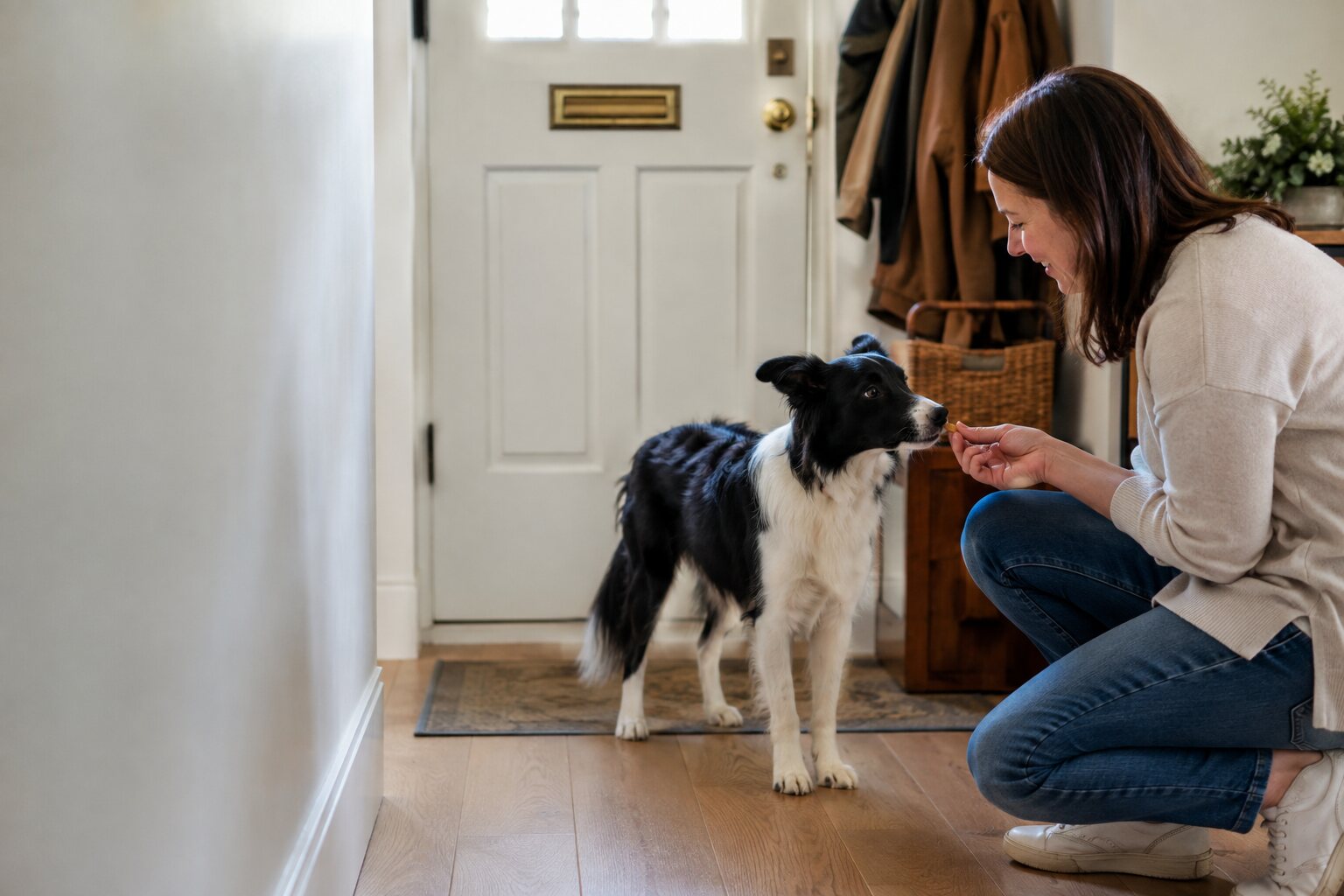
🐾 Harley hint: Try to reward the moment your dog notices the door sound before the barking reaches full volume. Practising when nothing exciting is actually happening makes this much easier. If your dog is generally running on high alert, our indoor enrichment ideas and training-treat guide can support the practice.
article” style=”max-width:900px;margin:0 auto;line-height:1.75″>
A dog barking at the front door is not necessarily being naughty. They may be alerting you, feeling worried, becoming overexcited or responding to a routine they have rehearsed hundreds of times: sound happens, dog charges, door opens, person appears.
The solution is to give them a clearer, more rewarding job.
Why does my dog bark at the door?
- Alarm: an unexpected sound triggers a warning response.
- Excitement: the door predicts people, attention or activity.
- Worry: visitors entering the home feel unsafe or overwhelming.
- Frustration: a barrier prevents the dog reaching the person.
- Habit: barking has become the automatic first step in the routine.
Harley’s-house reality: you do not need to eliminate every alert. One or two barks can be useful. The goal is a dog who can notice the door and then respond to you.
What should I teach instead of barking?
A mat, bed or station away from the doorway gives the dog a simple physical task. Teach it before involving the door:
- Place the mat in a quiet room.
- Reward your dog for stepping onto it.
- Build toward four paws on, then sitting or lying down.
- Add a cue such as “mat” or “bed”.
- Practise while you move around and briefly touch the door handle.
Make the answer obvious: reward on the mat, not beside the front door. The location of the treat helps explain where you want your dog to remain.
A step-by-step door-barking plan
Step 1: reduce uncontrolled rehearsals
Ask expected visitors to message rather than knock while you begin training. Use a stairgate, internal door or lead where necessary, ensuring your dog still has a comfortable space and is not trapped beside the trigger.
Step 2: record the sound
Record your knock or doorbell and play it at barely audible volume. Immediately reward calm behaviour or cue the mat. If the dog barks, the sound was too loud or the session moved too quickly.
Step 3: add realistic movement
Once the recording is easy, practise walking toward the hallway, touching the handle and opening the door a fraction. Change only one part at a time.
Step 4: introduce a helper
Ask someone familiar to knock softly once. Cue the mat, reward and let the helper enter only when the dog is manageable. Keep the first sessions extremely short.
Step 5: practise with different people
Dogs do not automatically generalise. A calm response to your partner may not transfer immediately to a delivery driver wearing a high-vis jacket.
Small rewards make repetition easier
We have tried Fidelis treats with Harley. Their Mini Chicken Training Bones are a suitably small option to compare for frequent practice. Adjust normal meals so training extras do not quietly become a second dinner.
What if my dog keeps barking after the visitor enters?
Give the dog distance and avoid forcing interaction. Visitors can ignore the dog initially—no leaning, reaching or direct staring. Reward the dog for checking in with you or remaining on their mat.
If the dog is fearful, lunging, snapping or unable to recover, stop practising with live visitors and speak to a qualified behaviourist.
Common mistakes
- Shouting “quiet” repeatedly: it may sound like you are joining in.
- Only practising during real deliveries: the situation is already too difficult.
- Opening the door while the dog is rushing forward: this rehearses the same chain.
- Using food to lure a frightened dog closer: create distance instead.
- Expecting silence immediately: reward recovery and responsiveness first.
Worth remembering: a tired dog is not automatically a calm dog. Combine suitable exercise with sniffing, enrichment and genuine rest. Our guide to tiring out a high-energy dog indoors has practical rainy-day options.
Frequently asked questions
Should I let my dog bark once?
You can decide what suits your household. Many owners accept a brief alert and teach the dog to disengage on cue.
Will a “no-bark” device solve it?
A device does not address why the dog is barking and may increase worry. Reward-based training and sensible management teach the behaviour you actually want.
Why is my dog worse with delivery drivers?
The knock, unfamiliar clothing, fast movement and immediate departure create a powerful pattern. From the dog’s perspective, barking may appear to make the visitor leave.